Women took part in the Vietnam War on every side. American women served mostly as nurses and in support roles, while Vietnamese women worked as soldiers, militia, nurses, laborers and organizers. For many years their roles were overlooked.
Counts of women who served vary by source and by how “service” is defined, so the numbers here are approximate.
American women
More than 11,000 American women served in the military in Vietnam, according to commonly cited figures. Most were nurses in the Army, Navy and Air Force. Others worked in intelligence, administration and communications. Fewer than 800 members of the Women’s Army Corps served in Vietnam between 1966 and 1973, generally in unarmed support jobs.
Nurses worked in evacuation hospitals and field hospitals near the fighting, often for long shifts, treating wounded soldiers who arrived quickly by helicopter. Eight military women died in Vietnam, all of them nurses. Their names are on the Vietnam Veterans Memorial. Civilian women also served as Red Cross volunteers, Catholic Relief Services workers, entertainers and war correspondents, and some died.
Many women came home to little recognition. The Vietnam Women’s Memorial, a statue of three women caring for a wounded soldier, was dedicated in Washington, D.C., in 1993. The effort to build it was led by Diane Carlson Evans, an Army nurse who served in Vietnam.
Photo: U.S. Army, public domain
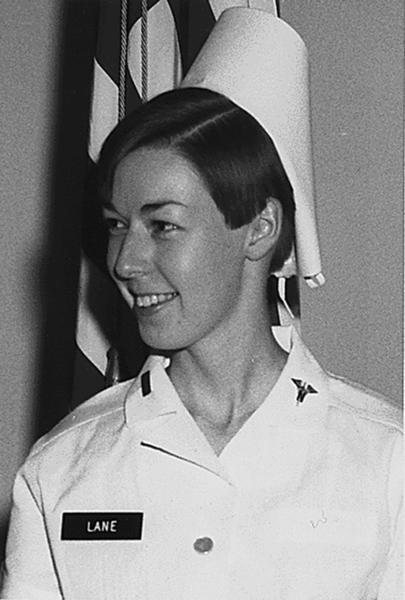
Sharon Lane
Army nurse · killed June 1969
Her role. A first lieutenant in the Army Nurse Corps who worked in a hospital at Chu Lai.
Her legacy. She was killed in June 1969 when an enemy rocket hit her hospital. She is the only American military woman killed by enemy action in Vietnam. Her name is on the Vietnam Veterans Memorial.
Photo: Chief Engineman (ENC.) R. J. Gentile, public domain
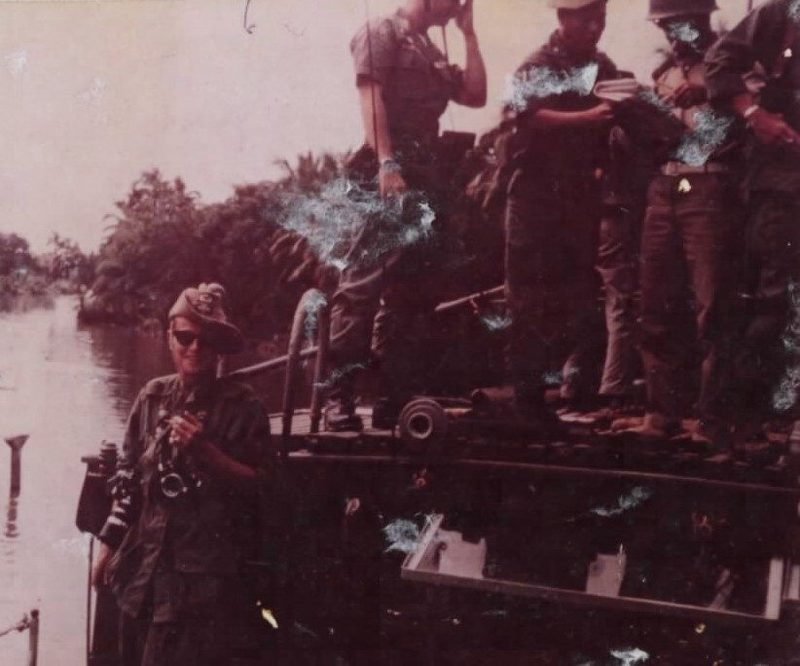
Dickey Chapelle
War correspondent and photographer
Her role. A photojournalist who had covered conflicts around the world and went on patrol with U.S. Marines in Vietnam in 1965.
Her legacy. She was killed on November 4, 1965, in Quang Ngai Province during Operation Black Ferret. She was the first American woman reporter killed in action.
Photo: John Kruzel, U.S. Department of Defense, public domain
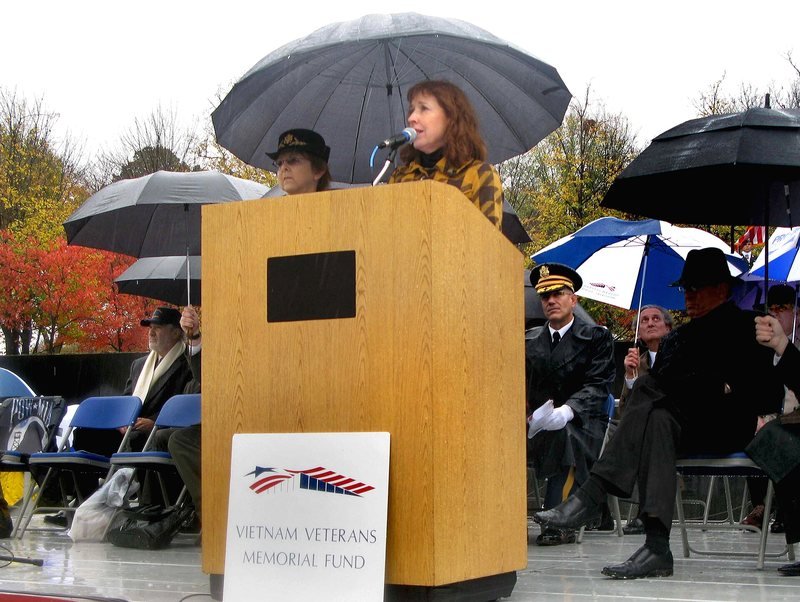
Diane Carlson Evans
Army nurse · founder of the Vietnam Women’s Memorial
Her role. An Army nurse who served in Vietnam.
Her legacy. She founded the Vietnam Women’s Memorial Project in 1984 to honor the women who served. The memorial was completed in Washington, D.C., in 1993.
In South Vietnam, women ran farms and businesses while many men were away in the army. Many worked as nurses, teachers and aid workers. The Women’s Armed Forces Corps was created as part of the South Vietnamese Army. It had more than 2,700 members by 1967, and its members mostly held medical and administrative jobs.
In 1968, after the Tet Offensive, a proposal to draft young women was debated, but it was not passed. The government also created the People’s Self-Defense Force, a part-time local militia that included many women, though reliable counts are hard to find.
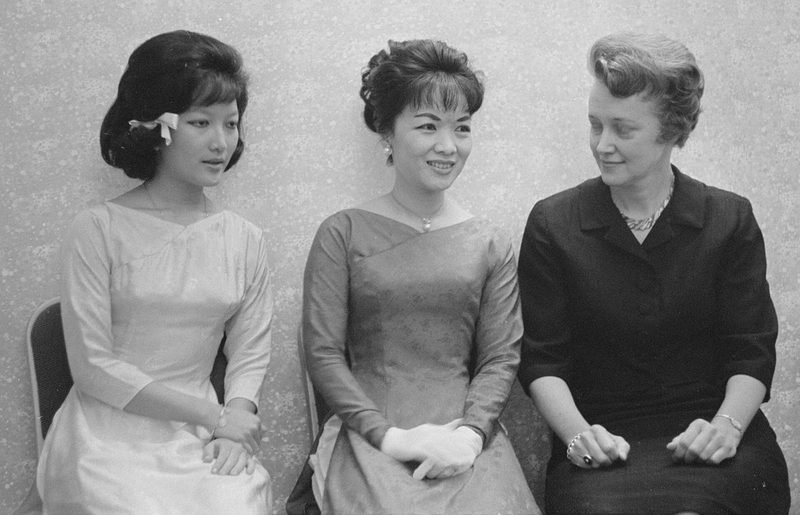
Photo: Marion S. Trikosko, public domain
Madame Nhu (Tran Le Xuan)
Political leader and sister-in-law of President Diem
Her role. The wife of presidential adviser Ngo Dinh Nhu and, in the early 1960s, the most prominent woman in South Vietnam’s government, because President Diem had no wife. She led the Women’s Solidarity Movement and a paramilitary corps that trained women in basic weapons use.
Her legacy. She was an outspoken defender of the Diem government and a controversial figure in both Vietnam and the United States. Historians still debate her influence.
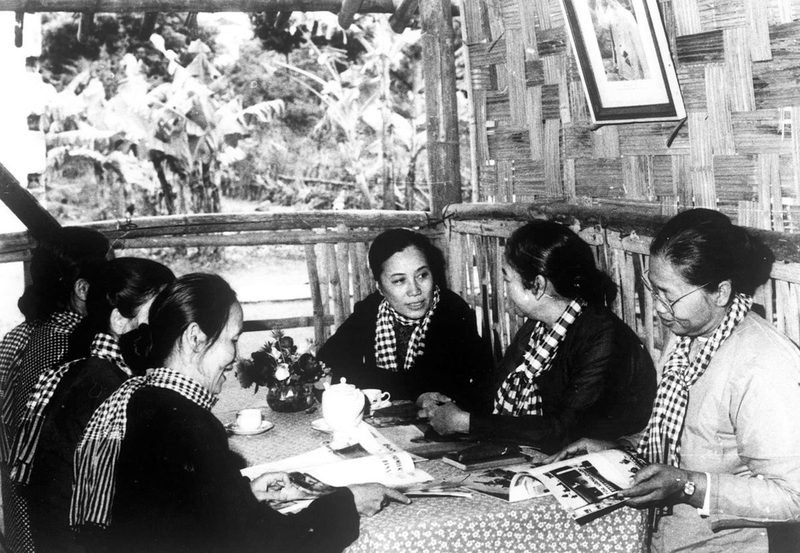
Women were a very large part of the war effort in North Vietnam and among the Viet Cong. They served as fighters, militia members, nurses and doctors, couriers, spies and organizers. Estimates of how many served vary widely, and some sources count more than a million women in military, militia and support roles.
In early 1961, more than 3,000 women were counted as guerrillas in Ben Tre Province alone, according to one source. Women in the villages of the Mekong Delta organized large protests that became known as the “Long-Haired Army.”
Tens of thousands of young women joined the Youth Shock Brigades, the Youth Volunteers, who worked on the Ho Chi Minh Trail. They repaired roads and bridges under bombing, cleared unexploded bombs and carried supplies. Some sources say women made up the majority of these groups.
Photo: Government of Vietnam, public domain
Nguyen Thi Dinh
Viet Cong commander
Her role. A revolutionary who played a leading role in the 1960 uprising in Ben Tre Province. She helped found the National Liberation Front and became deputy commander of the Liberation Armed Forces of South Vietnam.
Her legacy. She was one of the highest-ranking women in the communist forces and is remembered in Vietnam as a national hero.
Photo: Nguyễn Thị Bình/Government of Vietnam, public domain
Nguyen Thi Binh
Diplomat and later Vice President of Vietnam
Her role. A leading diplomat of the Viet Cong’s Provisional Revolutionary Government and its representative at the Paris peace talks. She signed the Paris Peace Accords for her government on January 27, 1973.
Her legacy. After the war she held senior government posts and served as Vice President of Vietnam from 1992 to 2002.
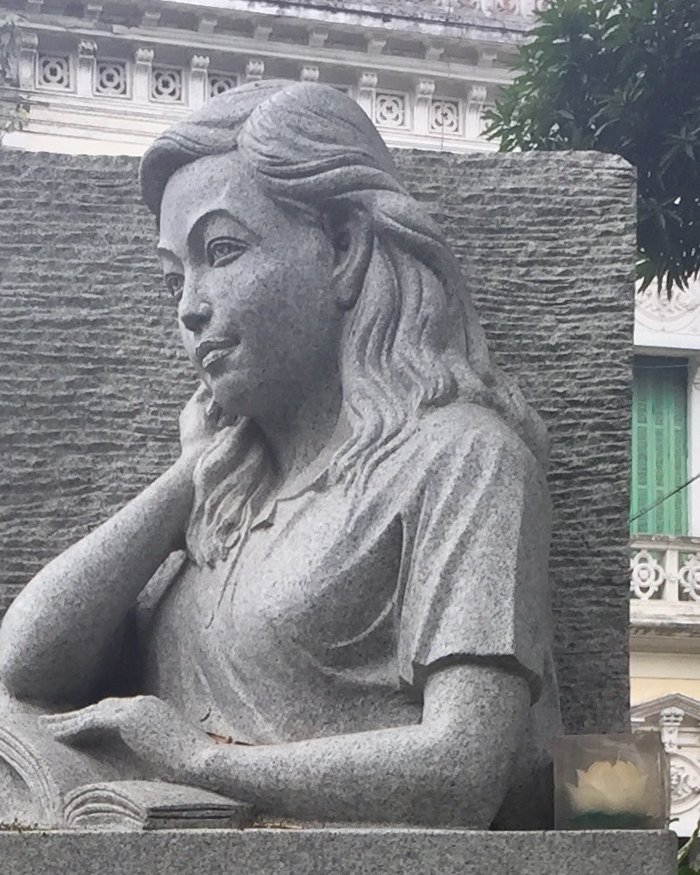
Bust at Chu Văn An High School, Hanoi. Photo: AxitTDTbenzoic, CC BY-SA 4.0
Dang Thuy Tram
Doctor and diarist
Her role. A young doctor who treated wounded fighters in Quang Ngai Province. She was killed in 1970 at age 27.
Her legacy. Her diary was taken from her field hospital by an American intelligence officer, Frederick Whitehurst, who decided not to destroy it. It was published in Vietnam in 2005 and became a best seller. Its English translation, Last Night I Dreamed of Peace, was published in 2007. Many readers in both countries have found it moving.
Figures for women’s service differ between sources and are given as approximate. Facts come from the sources linked in each entry, including a general summary on Wikipedia. Know a woman who served? Share her story on the memory wall. See something to correct? Email us.