VietnamWar.com

Education / Equipment of the Vietnam War

Equipment of the Vietnam War

The Vietnam War was fought with equipment that ranged from jet bombers and helicopters to rifles, bicycles and hand-dug tunnels. Here are the main pieces used by each side, with a short description of each.

The United States and its allies relied on air power, helicopters and heavy firepower. North Vietnam and the Viet Cong, supplied largely by the Soviet Union and China, used simple, rugged weapons, air defenses, and supply routes designed to survive bombing.

United States and allied forces

M16 rifle — Photo: David Reginald Combe, CC0

M16 rifle

Rifle

The standard U.S. infantry rifle by the late 1960s. It was light, fired a small 5.56 mm round, and could shoot single shots or automatic fire from a 20- or 30-round magazine. Early rifles jammed in wet, dirty conditions, so the design was changed in 1966 and soldiers were given cleaning kits and training.
Source: HISTORY.com, Weapons of the Vietnam War

M60 machine gun — Photo: Gerald Wallace Westbury, CC0

M60 machine gun

Machine gun

A belt-fed 7.62 mm machine gun nicknamed “the Pig.” It gave infantry squads steady covering fire at ranges of well over a thousand yards. The gun and its heavy belts of ammunition were hard to carry, so gunners were usually helped by an assistant.

Source: HISTORY.com, Weapons of the Vietnam War

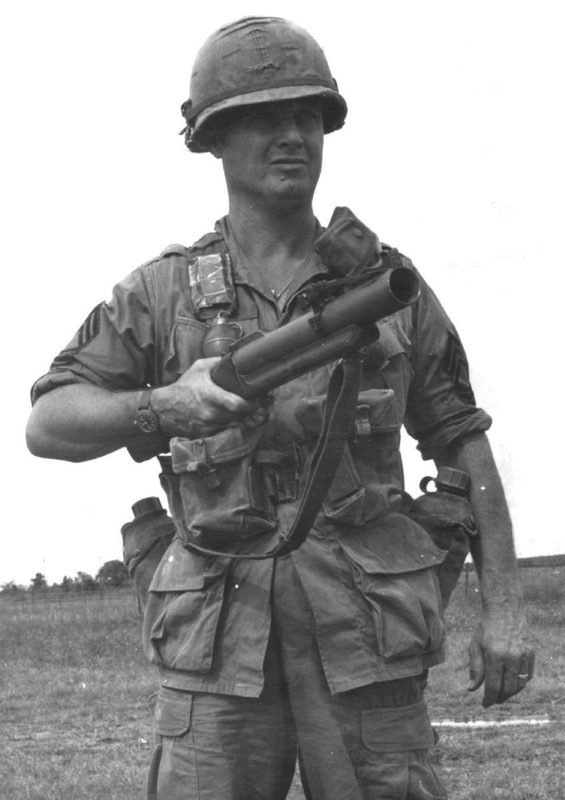
M79 grenade launcher — Photo: U.S. Army Heritage and Education Center, public domain

M79 grenade launcher

Grenade launcher

A single-shot, 40 mm launcher that lobbed a small grenade much farther than a soldier could throw. Soldiers called it the “thumper” or the “blooper” because of its sound. Each infantry squad often had one.

Source: U.S. Army, Football legends Bleier and Staubach discuss Vietnam

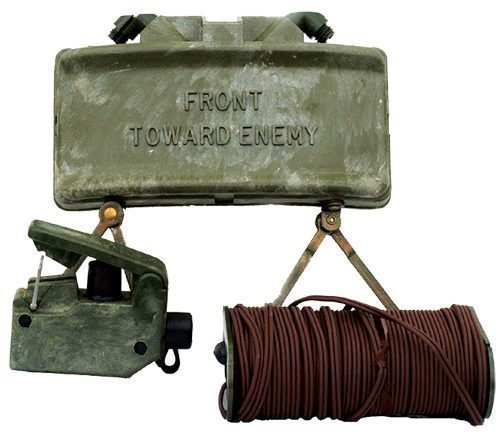
M18A1 Claymore mine — Photo: Wikimedia Commons, public domain

M18A1 Claymore mine

Mine

A curved, command-detonated mine that sprays small steel balls in one direction. Soldiers set it out to guard perimeters and ambush sites. The case is marked “Front Toward Enemy.”

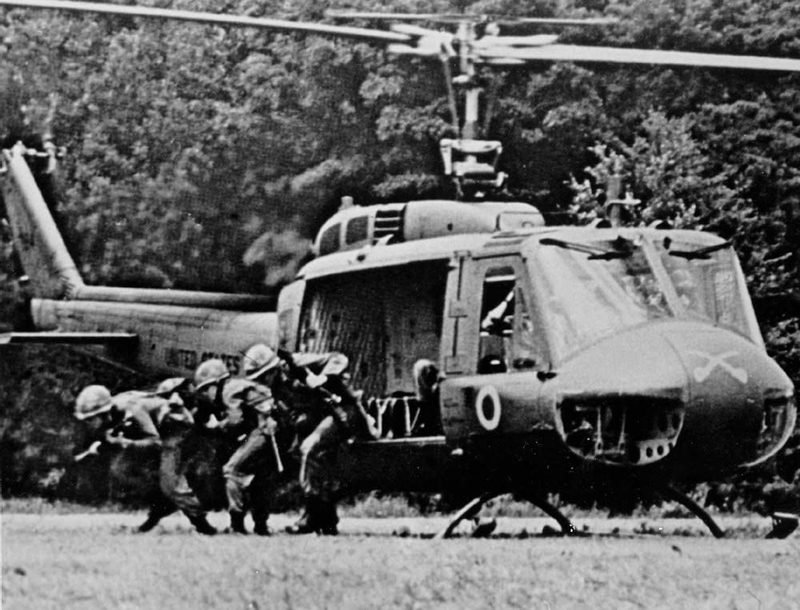
UH-1 “Huey” helicopter — Photo: United States Army, public domain

UH-1 “Huey” helicopter

Helicopter

The symbol of the war. Its official name was Iroquois, but the nickname “Huey” stuck. Hueys carried troops into battle, brought in supplies, and flew wounded soldiers to hospitals. Armed versions served as gunships. More than 7,000 Hueys served in Vietnam, and nearly half were lost.

Source: U.S. Army, A tale of the Huey and Cobra in Vietnam

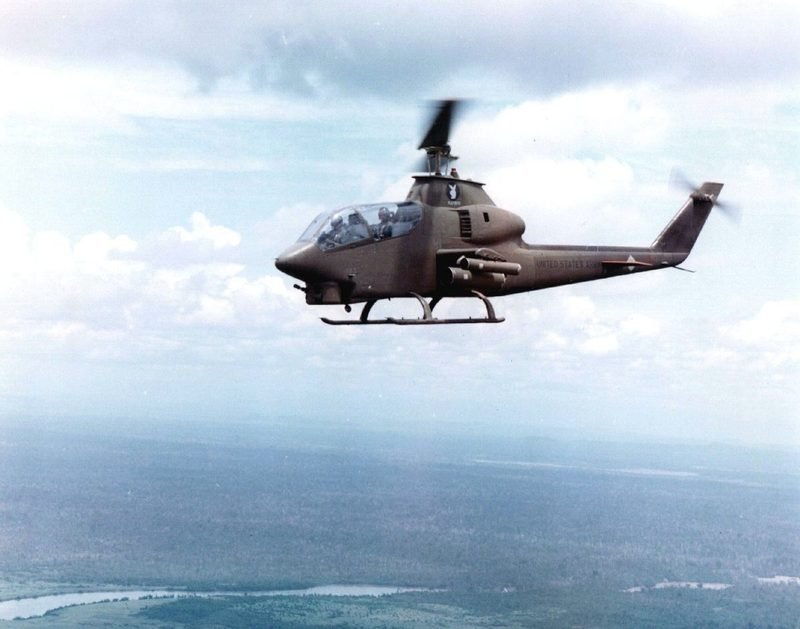
AH-1 HueyCobra — Photo: U.S. Army Heritage and Education Center, public domain

AH-1 HueyCobra

Attack helicopter

The first dedicated attack helicopter used by the U.S. Army. It entered service in June 1967 with a slim body, rockets and guns. By early 1968 it had replaced most Huey gunships. More than 1,000 were delivered through 1973, and around 300 were lost.

Source: U.S. Army, A tale of the Huey and Cobra in Vietnam

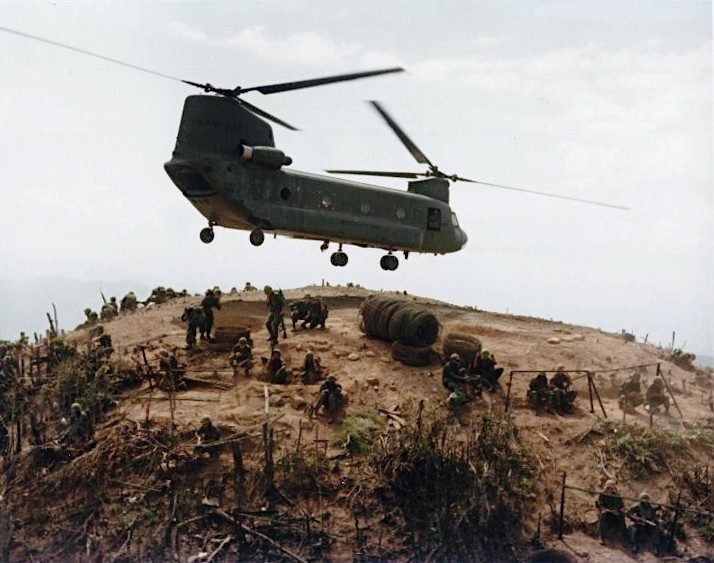
CH-47 Chinook — Photo: Wikimedia Commons, public domain

CH-47 Chinook

Heavy-lift helicopter

A twin-rotor helicopter that moved artillery, supplies and large groups of troops. It also lifted damaged aircraft out of the jungle.

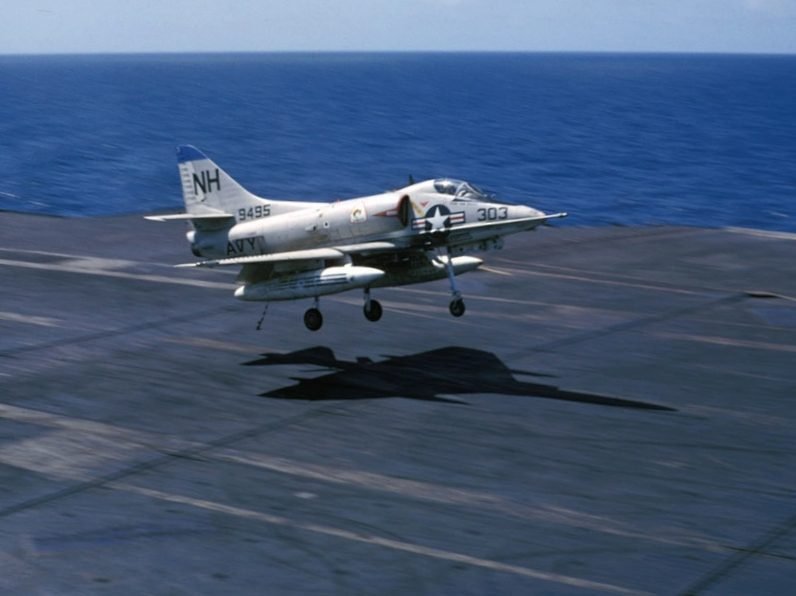
A-4 Skyhawk — Photo: U.S. Navy, public domain

A-4 Skyhawk

Attack jet

A small Navy attack jet flown from aircraft carriers off the coast. Its pilots bombed targets in North Vietnam. John McCain was flying one when he was shot down in 1967.

See also: John McCain

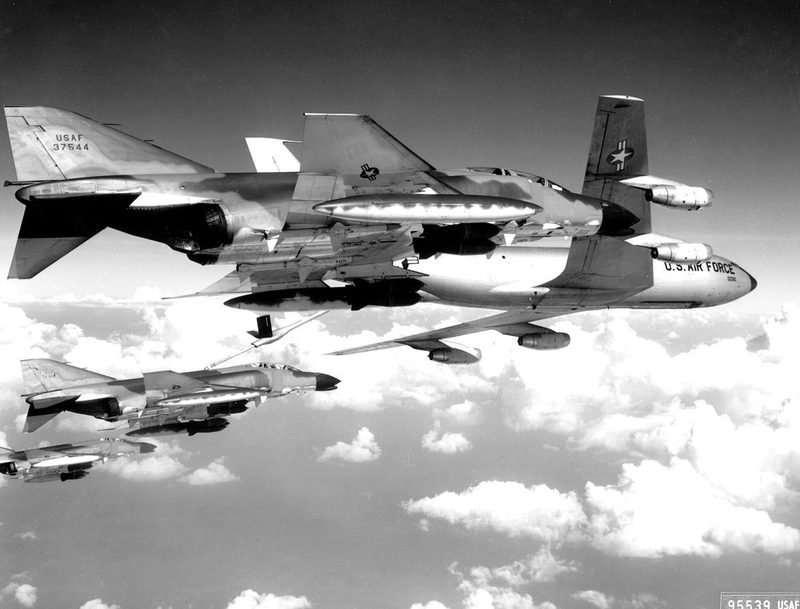
F-4 Phantom II — Photo: U.S. Air Force, public domain

F-4 Phantom II

Fighter-bomber

A twin-engine jet flown by the Air Force, Navy and Marines. It shot down enemy fighters and also carried heavy bomb loads. It helped U.S. forces control the skies, though many were lost to ground fire and missiles.

See also: Pete Peterson, who flew one

Source: HISTORY.com, Weapons of the Vietnam War

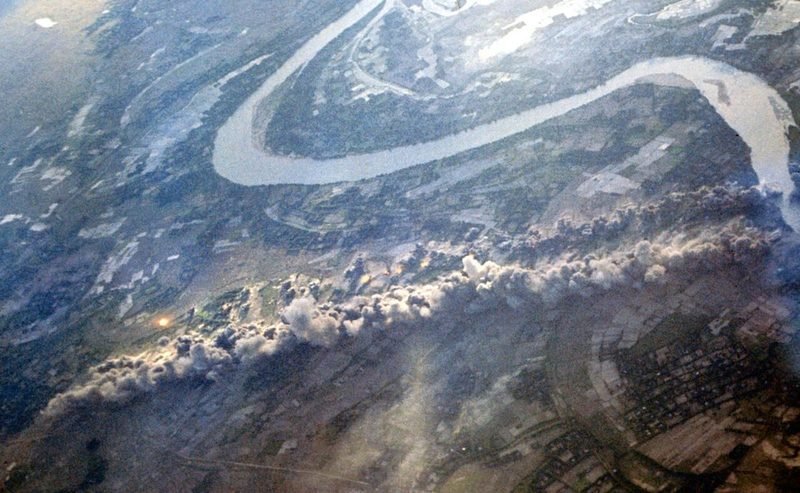
B-52 Stratofortress — Photo: U.S. Air Force, public domain

B-52 Stratofortress

Heavy bomber

A giant Boeing bomber designed in the late 1940s. B-52s began bombing targets in South Vietnam in 1965 and later hit North Vietnam, flying from bases on Guam and in Thailand. They dropped huge loads of bombs from high altitude, often out of sight and sound of the target. They were used heavily again in the December 1972 bombing of Hanoi and Haiphong.

Source: HISTORY.com, Weapons of the Vietnam War

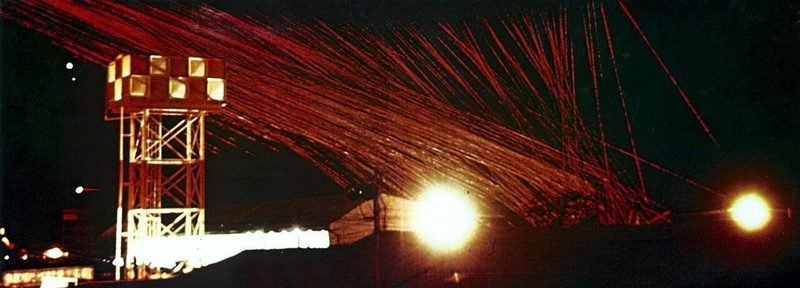
AC-47 “Spooky” — Photo: U.S. Air Force, public domain

AC-47 “Spooky”

Gunship

An old cargo plane fitted with machine guns that fired out of the left side as it circled a target. It could cover a base or a unit under attack for hours. Soldiers called it “Puff the Magic Dragon.”

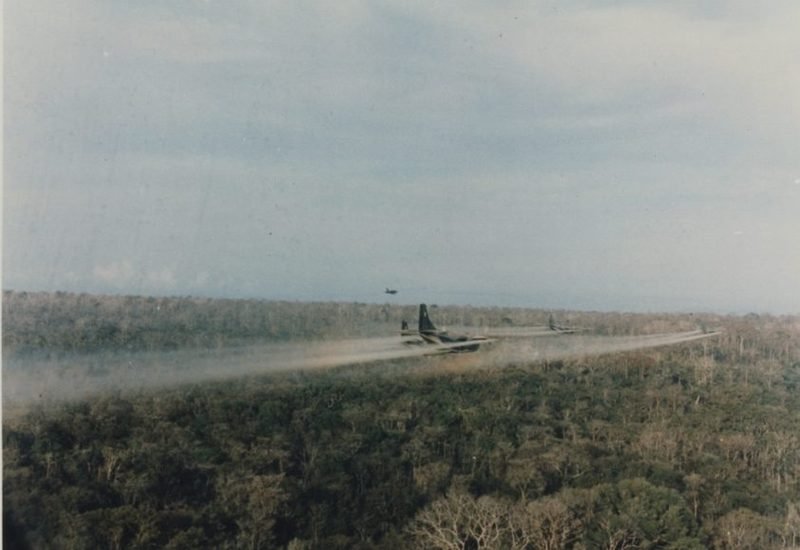
C-123 Provider and Operation Ranch Hand — Photo: U.S. Army, public domain

C-123 Provider and Operation Ranch Hand

Spray aircraft

From 1961 to 1972, U.S. planes sprayed herbicides to clear jungle cover and destroy crops. More than 19 million gallons covered about 4.5 million acres. The most-used herbicide, Agent Orange, contained dioxin and has since been linked to serious illness among veterans and Vietnamese civilians.

See also: How the PACT Act affects Vietnam veterans

Source: HISTORY.com, Weapons of the Vietnam War

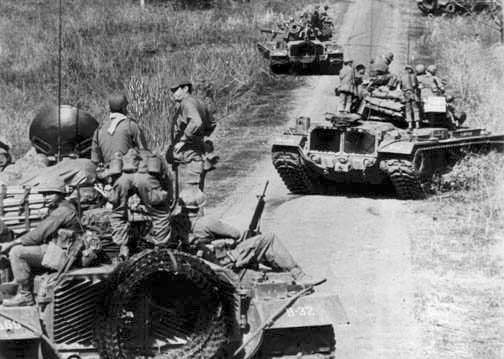
M48 Patton tank — Photo: Unknown author, public domain

M48 Patton tank

Tank

The main U.S. tank in Vietnam. It carried machine guns and a heavy gun, and could travel up to about 30 miles per hour. Jungle, rice paddies and soft ground limited its use, but it gave strong support to infantry on roads and open ground.

Source: HISTORY.com, Weapons of the Vietnam War

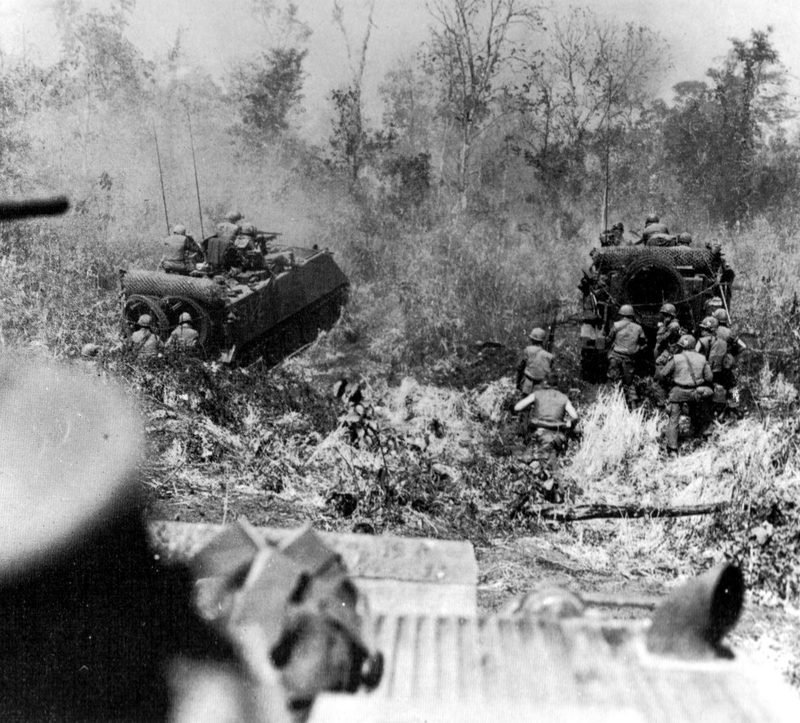
M113 armored personnel carrier — Photo: Lt. Gen. John H. Hay Jr., U.S. Army, public domain

M113 armored personnel carrier

Armored vehicle

A tracked, aluminum-hulled carrier that moved infantry and supplies. Crews added gun shields and extra machine guns, and the modified version was called the ACAV, short for Armored Cavalry Assault Vehicle.

Source: HISTORY.com, Weapons of the Vietnam War

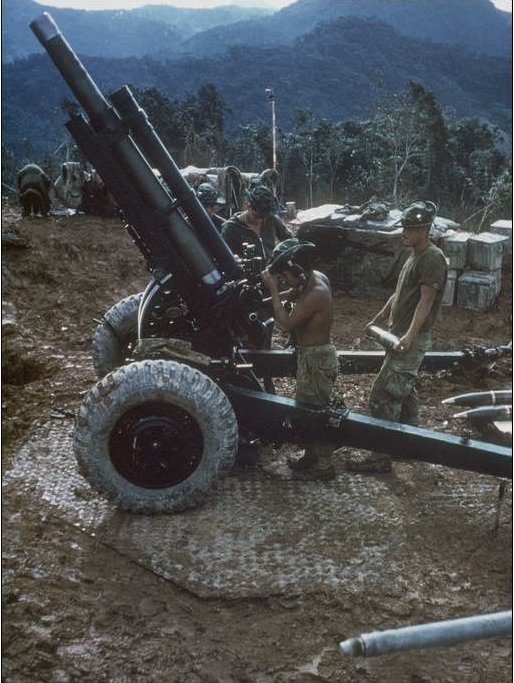
M101 105 mm howitzer — Photo: Wikimedia Commons, public domain

M101 105 mm howitzer

Artillery

The standard light artillery piece. A crew of about eight could fire several rounds a minute at targets over seven miles away. Howitzers were set up at “fire support bases,” hilltop camps that could cover troops in the field.

Source: HISTORY.com, Weapons of the Vietnam War

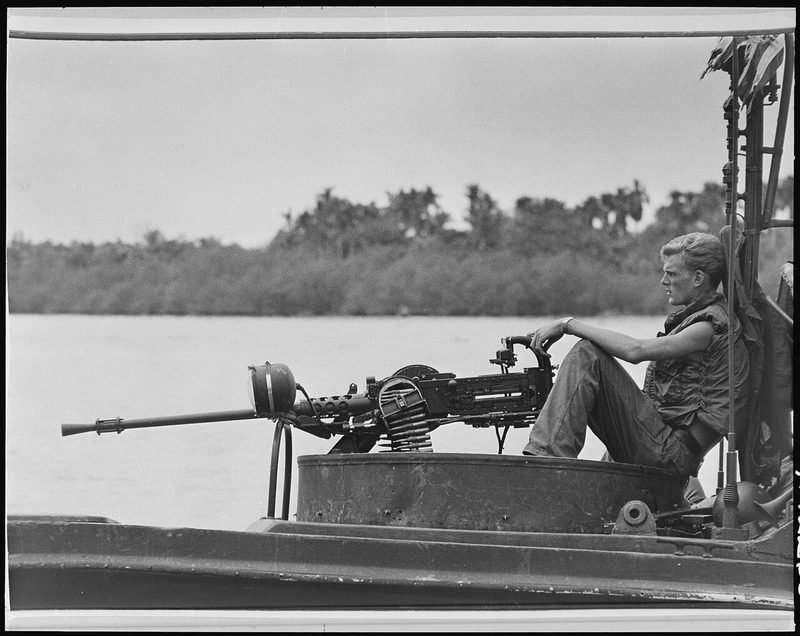
PBR (Patrol Boat, River) — Photo: Unknown author, public domain

PBR (Patrol Boat, River)

River boat

A fast fiberglass boat about 31 feet long, driven by water jets so it could run in shallow water. Navy crews patrolled the rivers and canals of the Mekong Delta in what was called the “Brown Water Navy.” They checked boats and tried to cut enemy supply routes.

North Vietnam and the Viet Cong

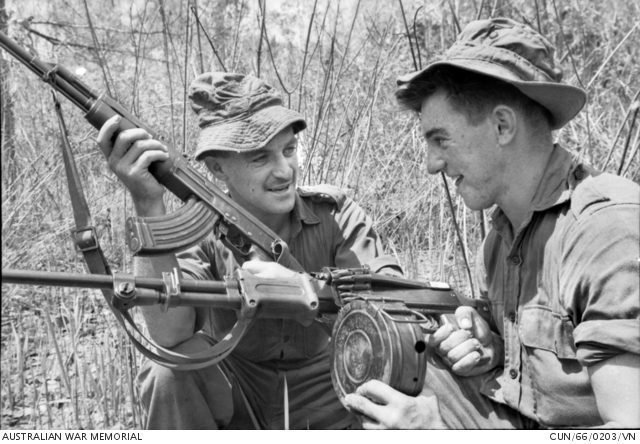
AK-47 rifle — Photo: William James Cunneen, CC0

AK-47 rifle

Rifle

The standard rifle of the North Vietnamese Army and the Viet Cong. It fired a 7.62 mm round from a 30-round magazine. It was simple, sturdy and easy to maintain in mud and rain. Soviet and Chinese versions were both used.

Source: HISTORY.com, Weapons of the Vietnam War

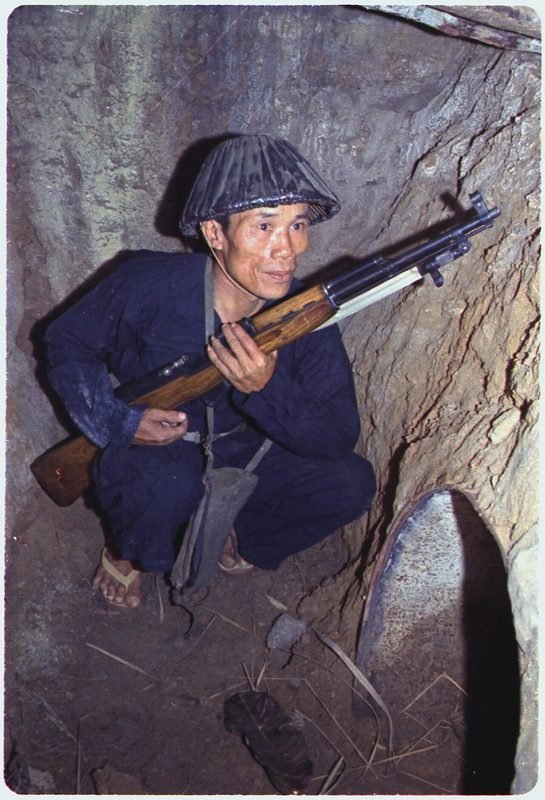
SKS carbine — Photo: Unknown author, public domain

SKS carbine

Rifle

A semi-automatic rifle widely used by Viet Cong units early in the war and by militia later. Each trigger pull fired a single shot.

Source: HISTORY.com, Weapons of the Vietnam War

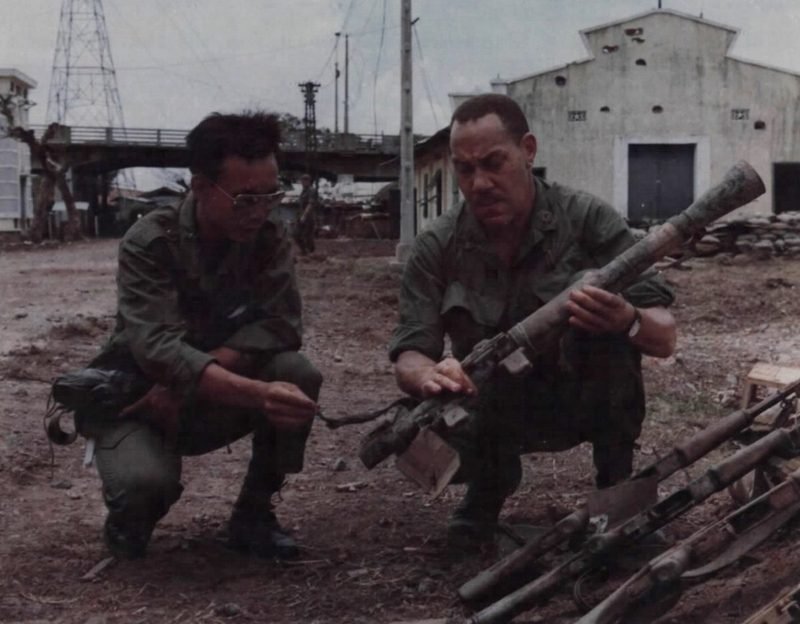
RPG-2 and RPG-7 rocket launchers — Photo: SP4 Bryan K. Grigsby, public domain

RPG-2 and RPG-7 rocket launchers

Rocket launcher

Soviet-designed, shoulder-fired weapons that launched rocket-propelled grenades. Small units used them against armored vehicles, bunkers and helicopters, which gave them power far beyond what a rifle could do.

Mortars and rockets — Photo: SP5 Robert C. Lafoon, U.S. Army, public domain

Mortars and rockets

Indirect fire

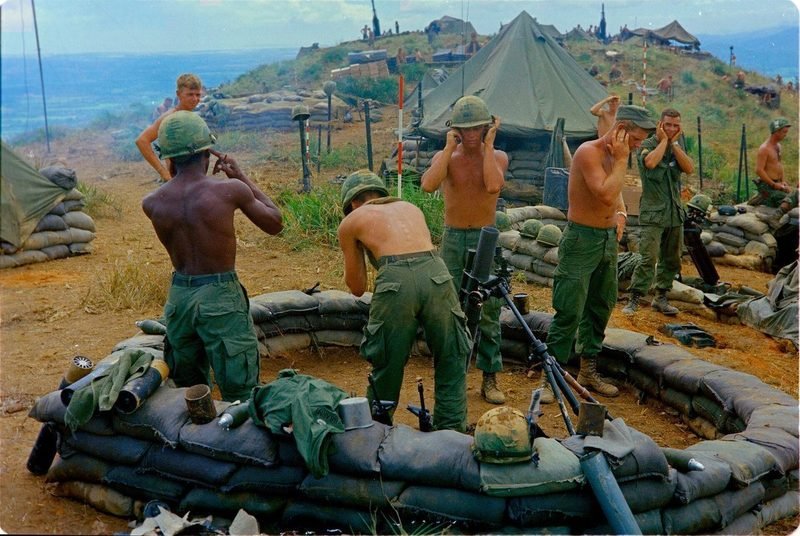
Mortars and rockets could be carried in pieces and fired from hiding. They were used to shell U.S. and South Vietnamese bases and cities, including Saigon.

Anti-aircraft guns — Photo: Gary Todd from Xinzheng, China, CC0

Anti-aircraft guns

Air defense

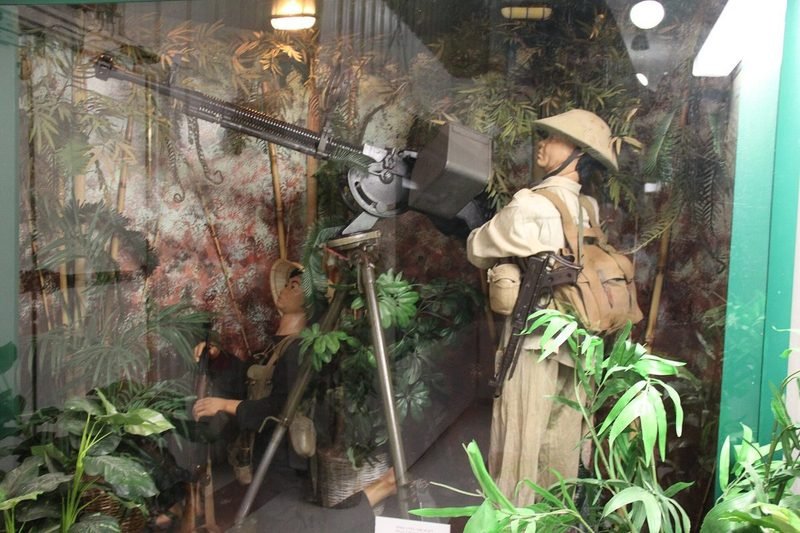
North Vietnam built one of the densest air defense systems in the world, with guns of many sizes around cities, bridges and the Ho Chi Minh Trail. Ground fire brought down many U.S. aircraft.

SA-2 surface-to-air missile — Photo: U.S. Air Force, public domain

SA-2 surface-to-air missile

Missile

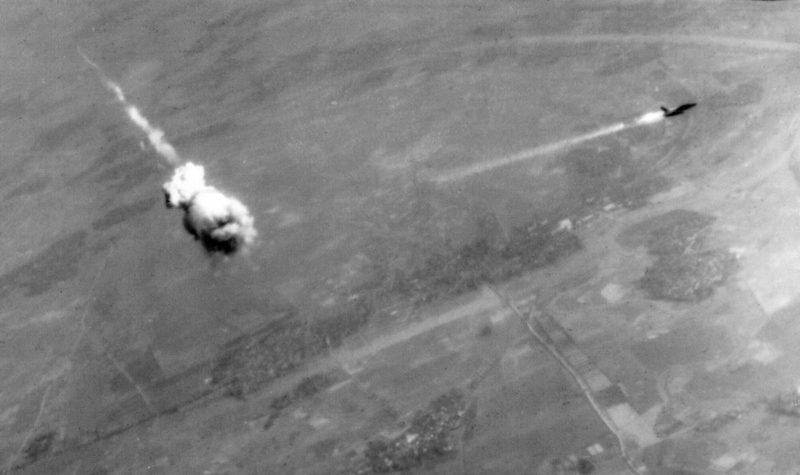
A large Soviet missile fired from sites around Hanoi and Haiphong. In July 1965 it brought down a U.S. aircraft for the first time in the war. American pilots changed their tactics, and special aircraft were later used to find and attack missile sites.

MiG-17 — Photo: Gary Todd, CC0

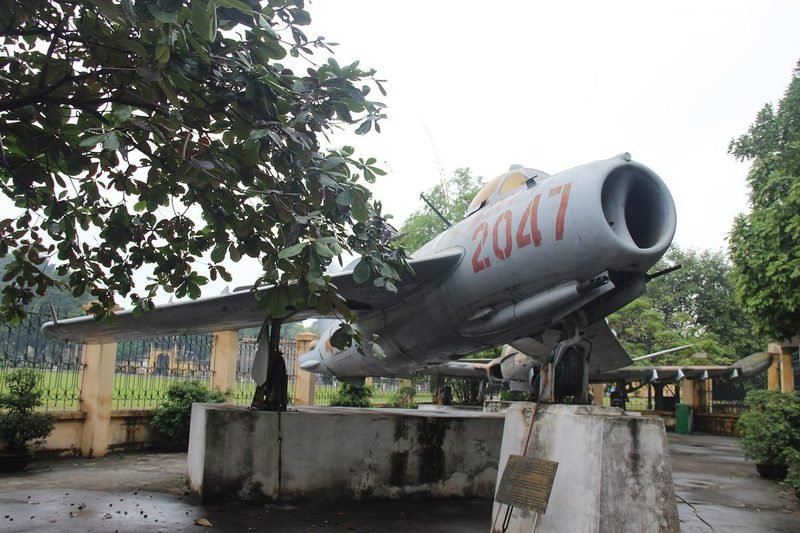
MiG-17

Fighter jet

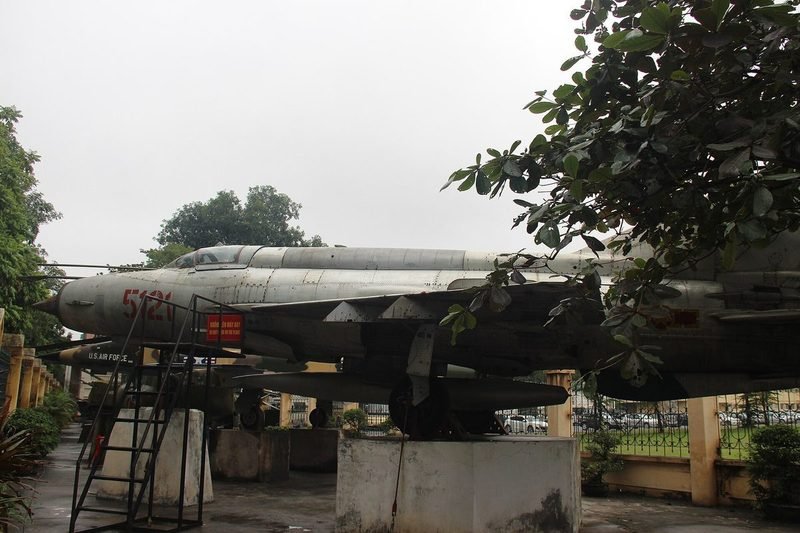
A Soviet-designed jet fighter that flew below the speed of sound but could turn very sharply. It was armed with cannon and fought U.S. fighters over North Vietnam.

MiG-21 — Photo: Gary Todd, CC0

MiG-21

Fighter jet

A faster, supersonic Soviet-designed fighter armed with air-to-air missiles. North Vietnam used it to attack U.S. bombers and fighters flying into the north.

PT-76 and T-54 tanks — Photo: kitmasterbloke, CC BY 2.0

PT-76 and T-54 tanks

Tank

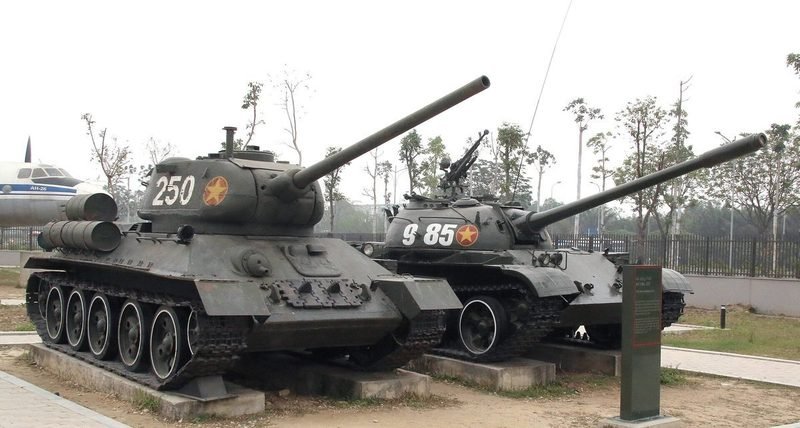
Soviet-built tanks used by the North Vietnamese Army. The light, amphibious PT-76 was first used in large attacks in early 1968. The heavier T-54 played a major part in the 1972 Easter Offensive and in the final campaign in 1975.

Trucks and bicycles on the Ho Chi Minh Trail — Photo: Air Force stock photo, public domain

Trucks and bicycles on the Ho Chi Minh Trail

Supply route

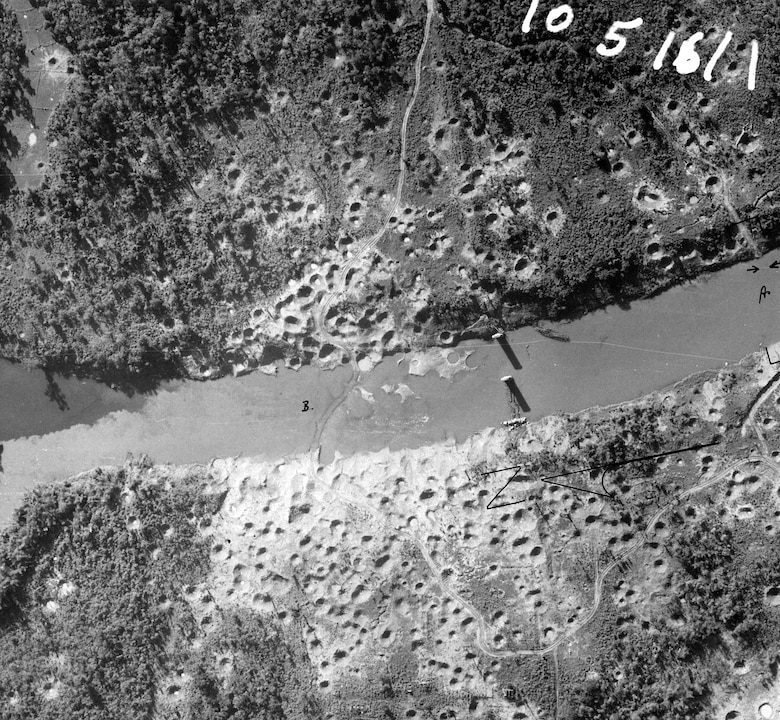
A network of roads, paths and river crossings through Laos and Cambodia carried troops and supplies south. Trucks moved mostly at night, and porters pushed heavily loaded bicycles along narrow paths. Work crews repaired the routes after bombing.

See also: Women on the trail

Tunnels and booby traps — Photo: U.S. Army, public domain

Tunnels and booby traps

Defense

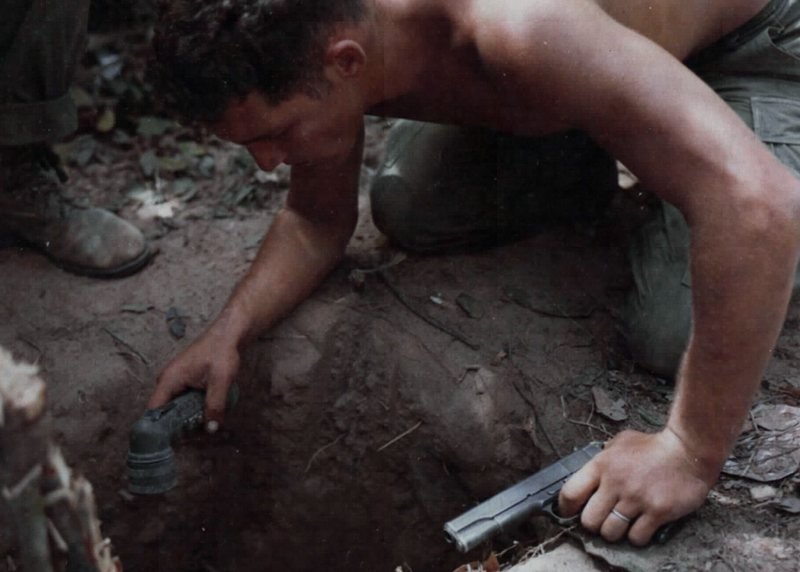
Viet Cong fighters dug large tunnel networks, such as the one near Cu Chi, to hide, store supplies and move without being seen. They also set simple booby traps and mines along trails, which slowed patrols and made soldiers wary of every step. U.S. troops who searched the tunnels were nicknamed “tunnel rats.”

Source: HISTORY.com, Weapons of the Vietnam War

More to explore

Figures for production and losses differ between sources. Where we give numbers, we use rounded totals from the sources linked in each entry. For more, see the museum collections at the Pritzker Military Museum & Library and the National Museum of the United States Army. See something to correct? Email us.

More: Equipment · Veterans in politics · Famous veterans · Protesters · Women in the war · Timeline