1968 · 31 photographs
The Tet Offensive
On January 30–31, 1968, during the Lunar New Year truce, North Vietnamese and Viet Cong forces attacked more than 100 cities and towns across South Vietnam. The month-long battle for Hue was the bloodiest of the offensive. Tet was a military defeat for the attackers, but it shook American confidence in the war.
Some photographs in this gallery show wounded soldiers and civilians.










All captions and sources
- Before the storm. Marines tour the Imperial City in Hue months before the Tet Offensive.
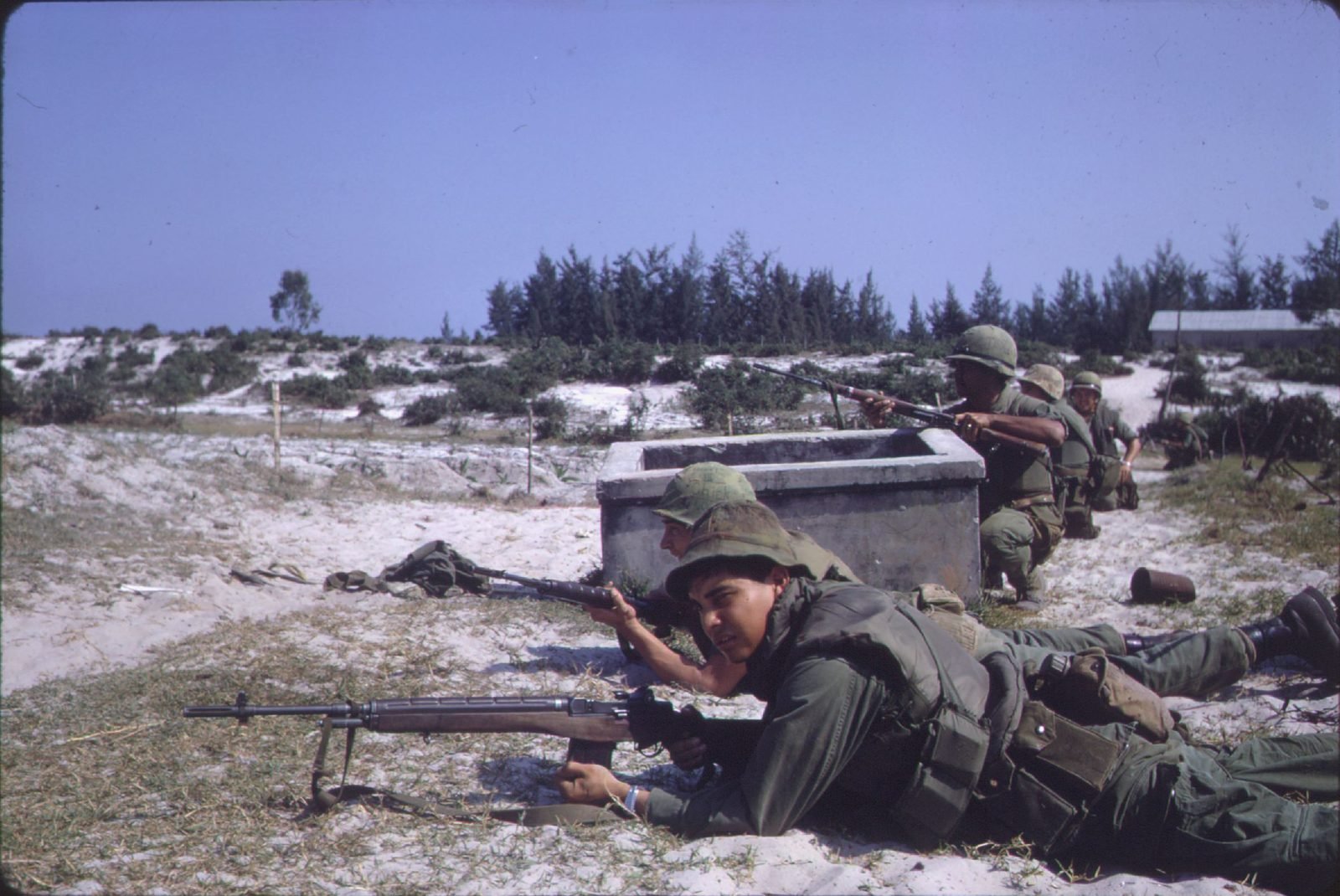
October 3, 1967 · Hue · Photo: Cpl. R. A. Lowes, U.S. Marine Corps. National Archives, 127-GVB-327-A189501. Source - Hamo village. Marines in action at Hamo village during the Tet Offensive.
1968 · South Vietnam · U.S. Marine Corps photo. National Archives, 127-N-A190342. Source - Out of Khe Sanh. Air Force medical personnel carry a wounded Marine from the aid station at the besieged base at Khe Sanh to a waiting C-130 for the flight to a hospital.
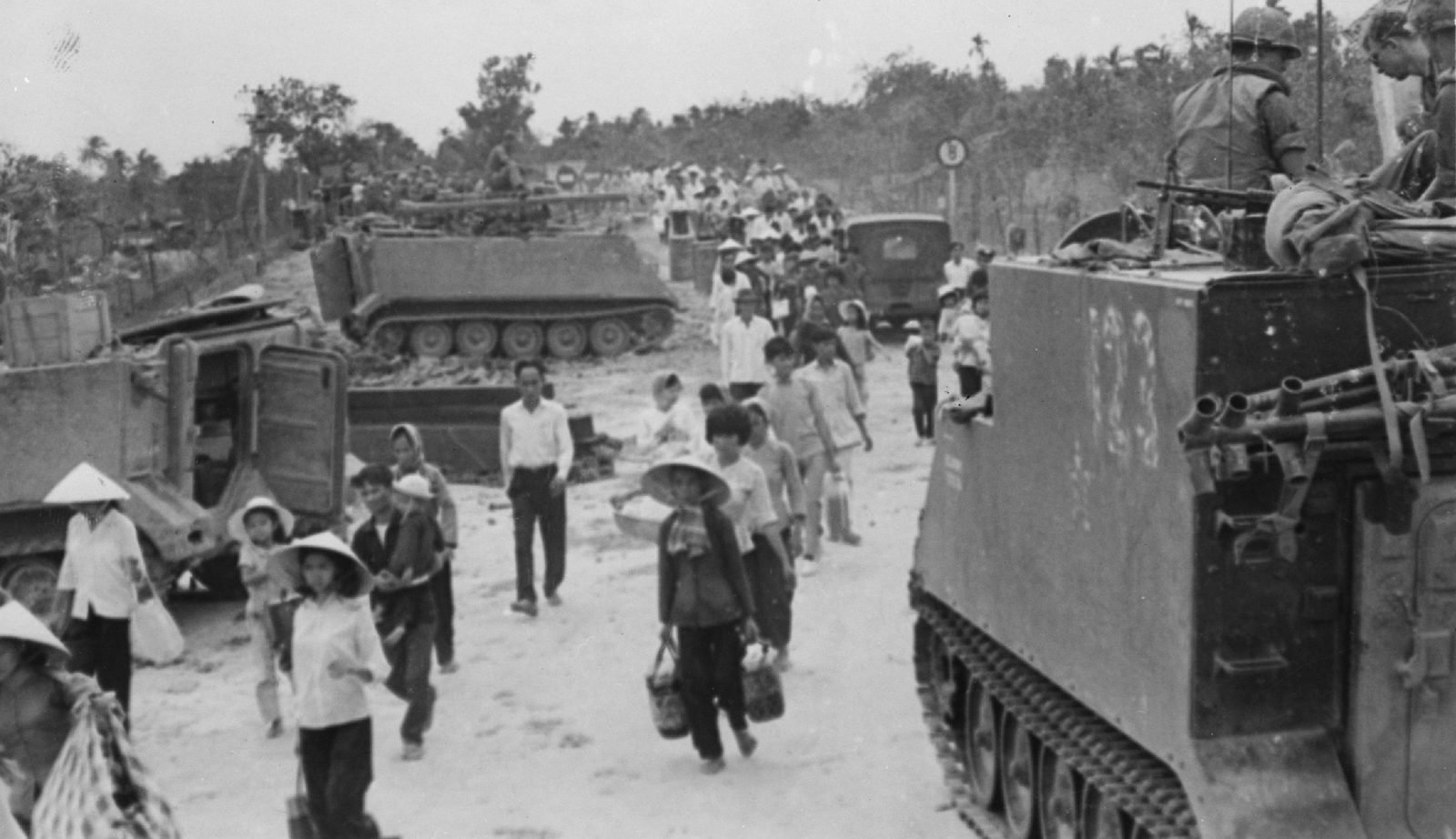
1968 · Khe Sanh · U.S. Department of Defense photo. National Archives, 330-CFD-DF-SN-82-00886.jpeg. Source - Leaving My Tho. M113 armored personnel carriers stand by as Vietnamese families leave My Tho, in the Mekong Delta, during the Tet Offensive.
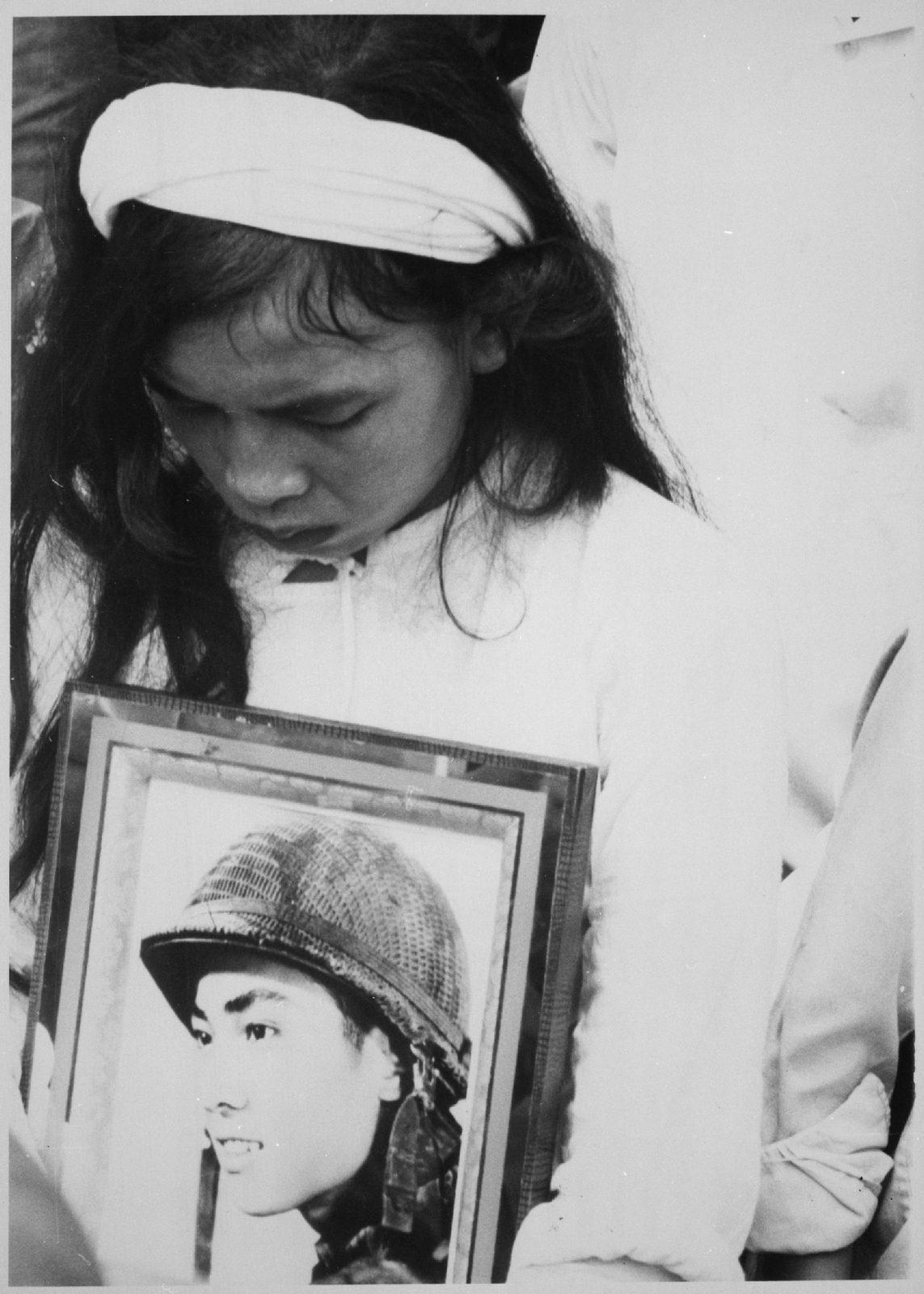
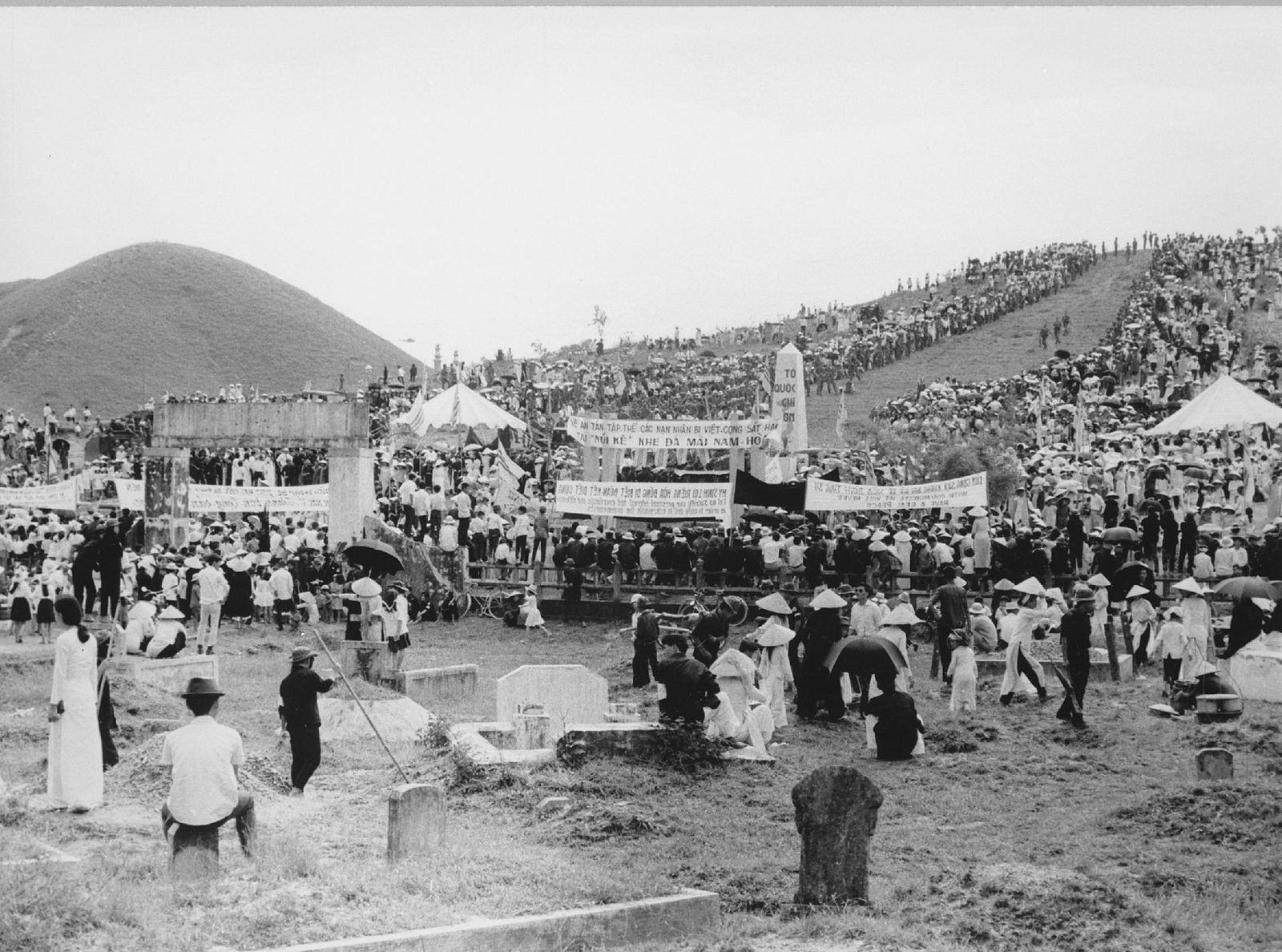
1968 · My Tho, Dinh Tuong Province · U.S. Army photo. National Archives, 111-SC-646675. Source - A widow mourns. A young widow holds a photograph of her missing husband at a mass funeral in Hue for nearly 400 civilians killed during the Tet Offensive and later found in common graves.
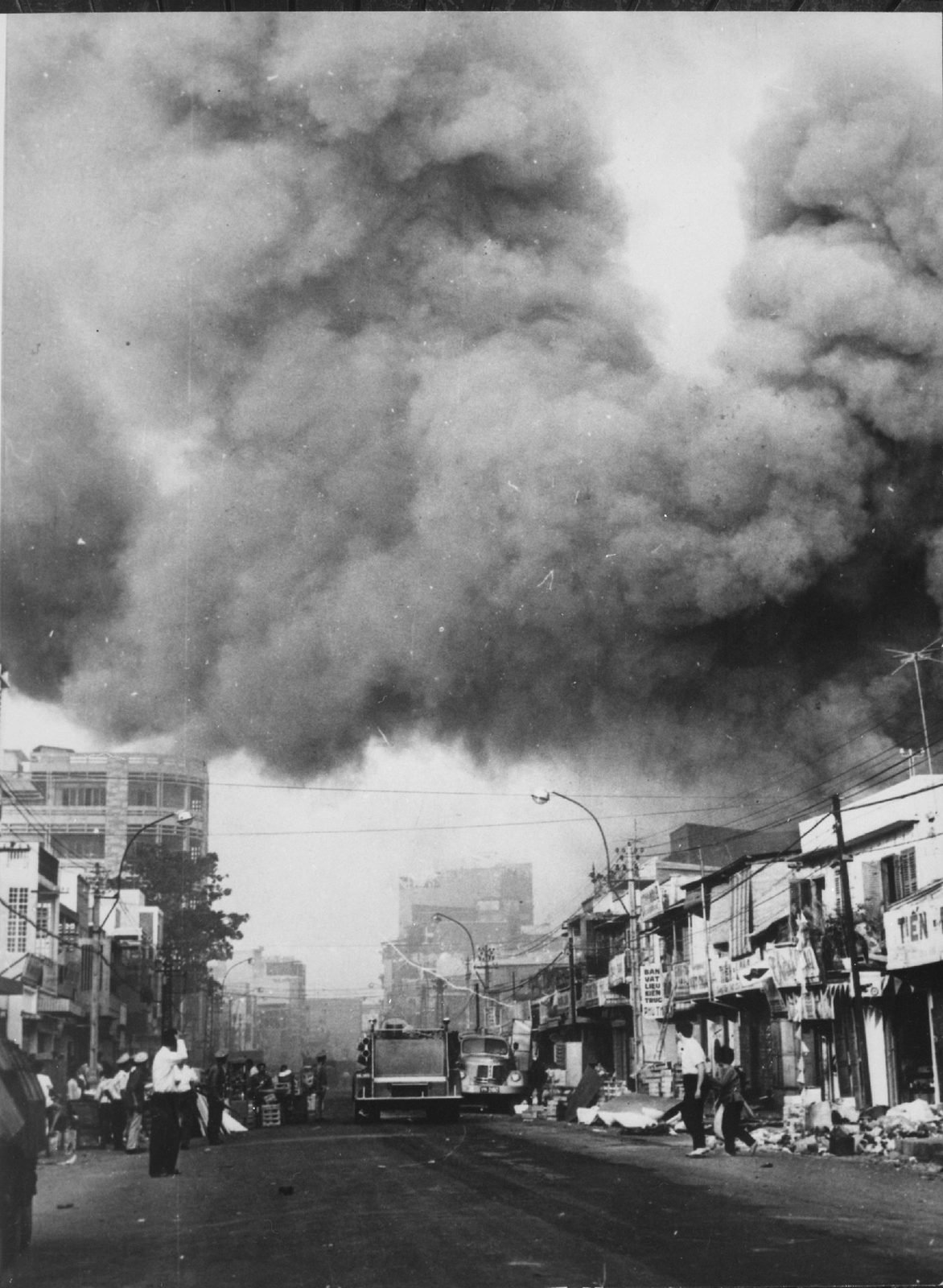
After Tet 1968 · Hue · U.S. Information Agency photo. National Archives, 306-MVP-4(8). Source - Saigon burns. Black smoke rises over Saigon as fire trucks race to fires set during the Viet Cong attacks on the capital.
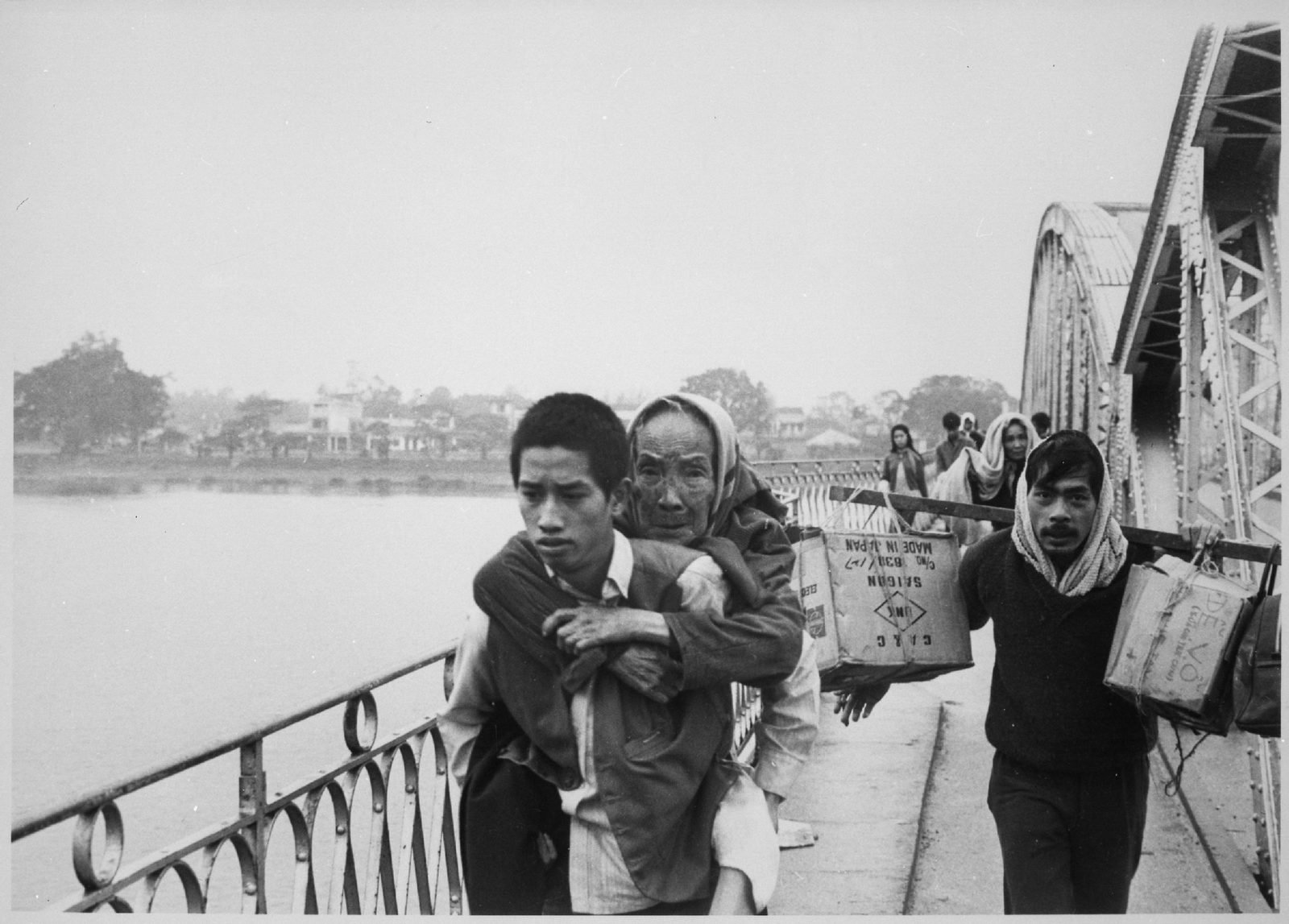
January–February 1968 · Saigon · U.S. Information Agency photo. National Archives, 306-MVP-25(2). Source - Crossing the Perfume River. Refugees cross a bridge over the Perfume River to escape the fighting in Hue. The bridge was blown into the river soon after.
February 1968 · Hue · U.S. Information Agency photo. National Archives, 306-MVP-22(6). Source - The blown bridge. Young and old make their way to the south shore of the Perfume River across the wreckage of the blown bridge.
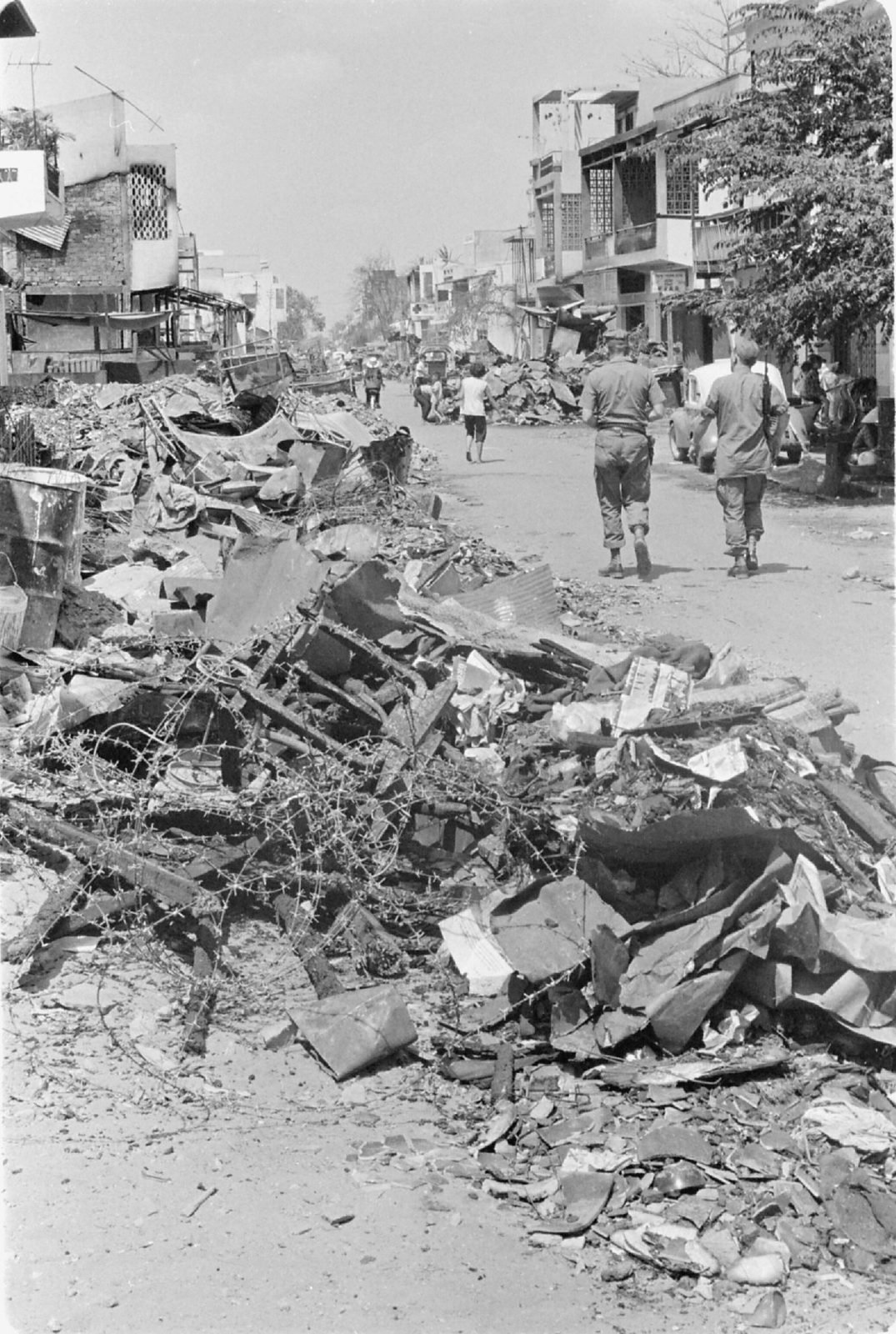
February 1968 · Hue · U.S. Information Agency photo. National Archives, 306-MVP-22(9). Source - Cholon burned. Rubble and barbed wire line the streets of Cholon after the fighting.
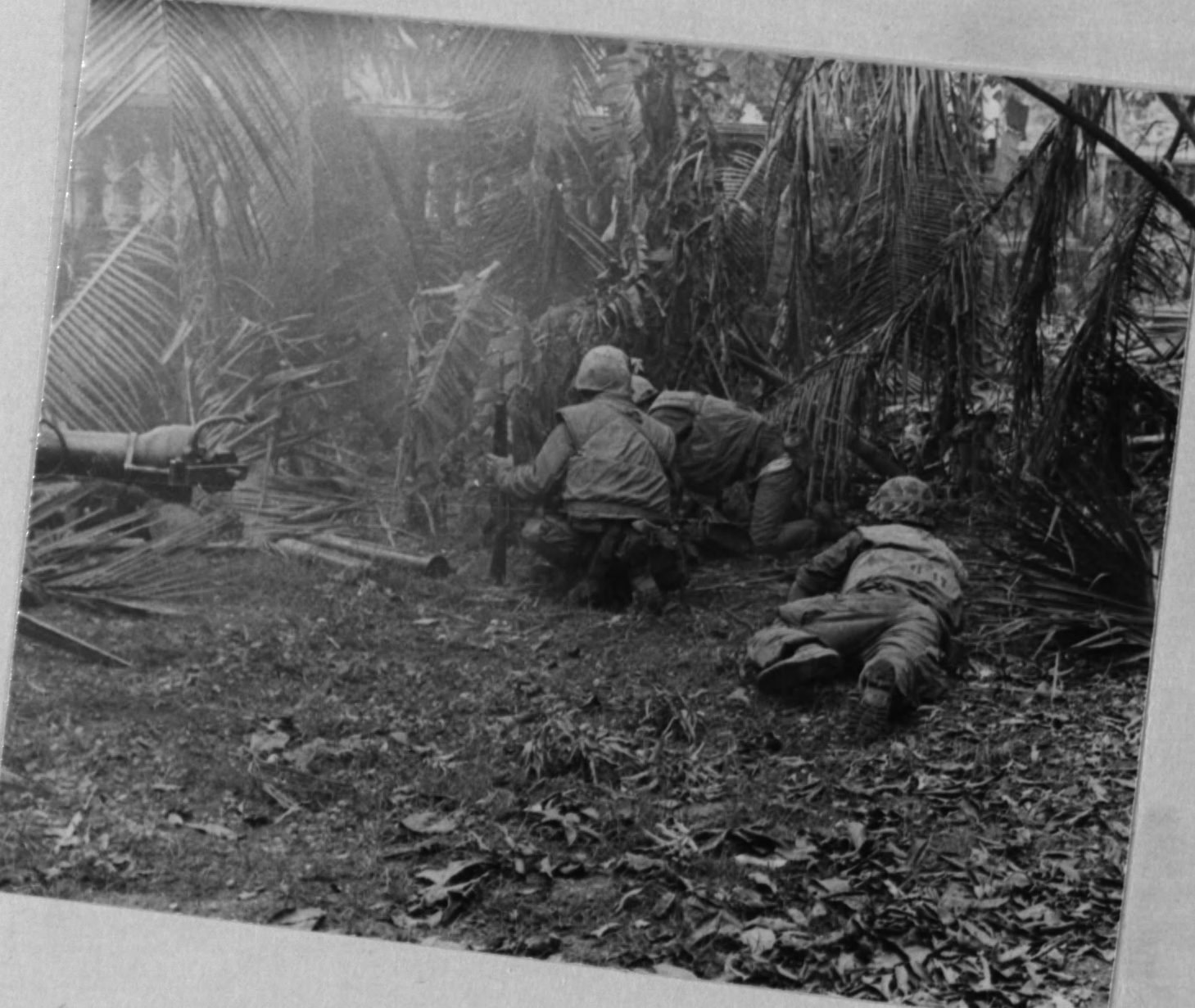
February 1968 · Cholon, Saigon · U.S. Navy photo. National Archives, 428-N-1130131. Source - Point-blank. Heavy automatic-weapons fire rakes a 106mm recoilless rifle team of the 1st Marine Regiment during fighting at point-blank range in Hue.
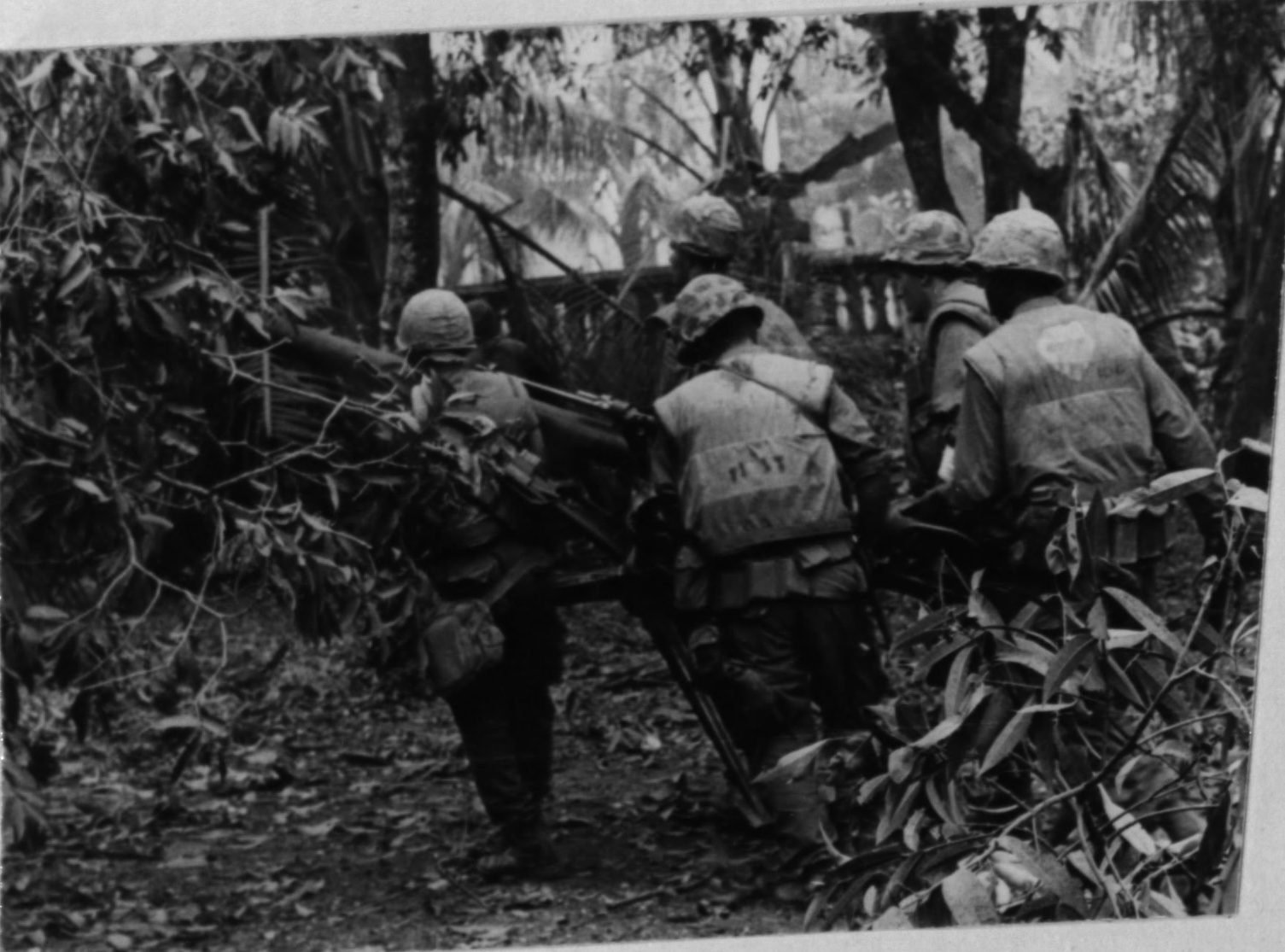
February 1968 · Hue · U.S. Marine Corps photo. National Archives, 127-GVB-118-A190409. Source - Recoilless rifle. Five Marines of the 1st Marine Regiment muscle a 106mm recoilless rifle into position against a nest of snipers during house-to-house fighting in Hue.
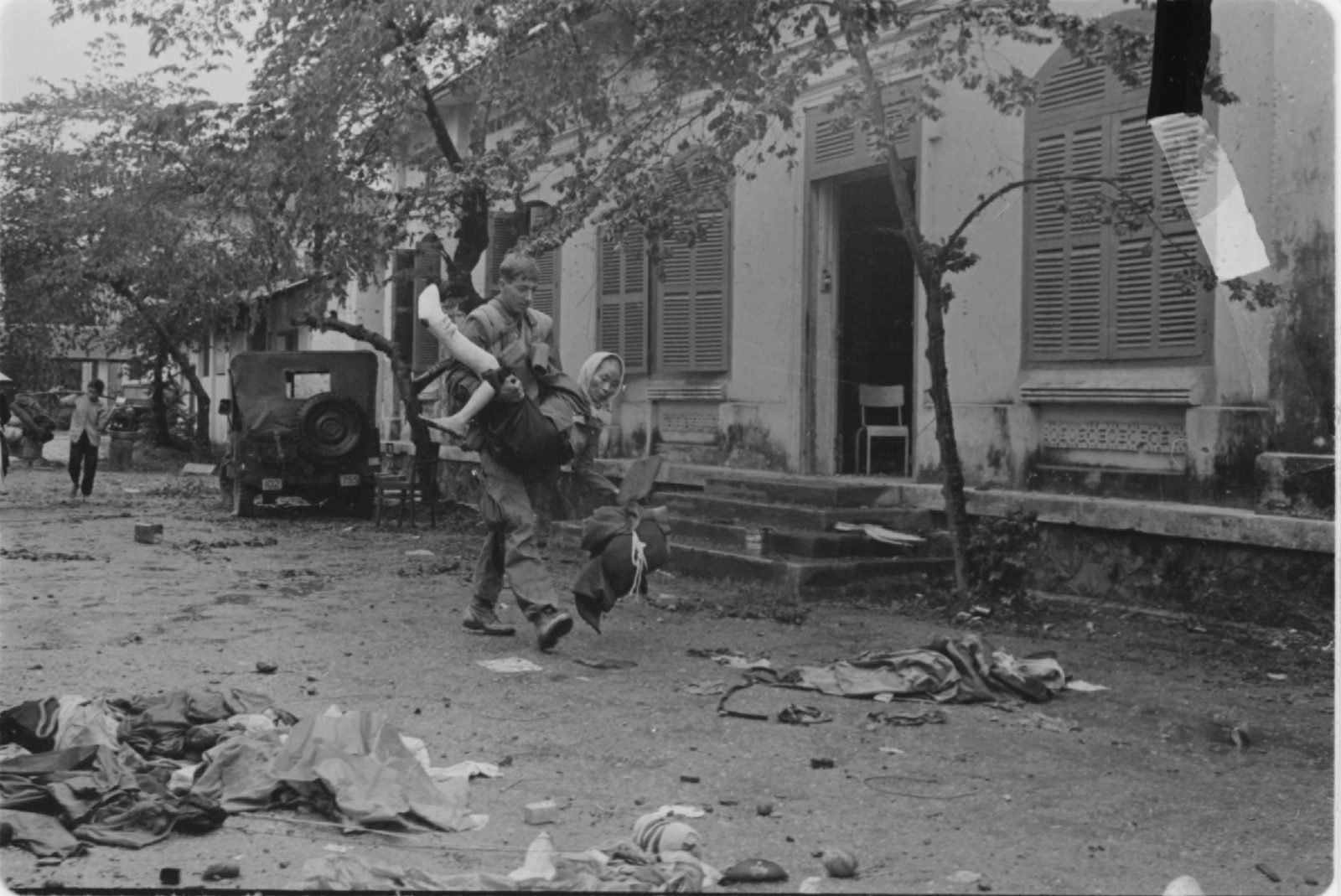
February 1968 · Hue · U.S. Marine Corps photo. National Archives, 127-GVB-118-A190410. Source - Out of Hue Hospital. A grenadier from H Company, 2nd Battalion, 5th Marines, carries a Vietnamese woman from Hue Hospital to safety during the fighting.
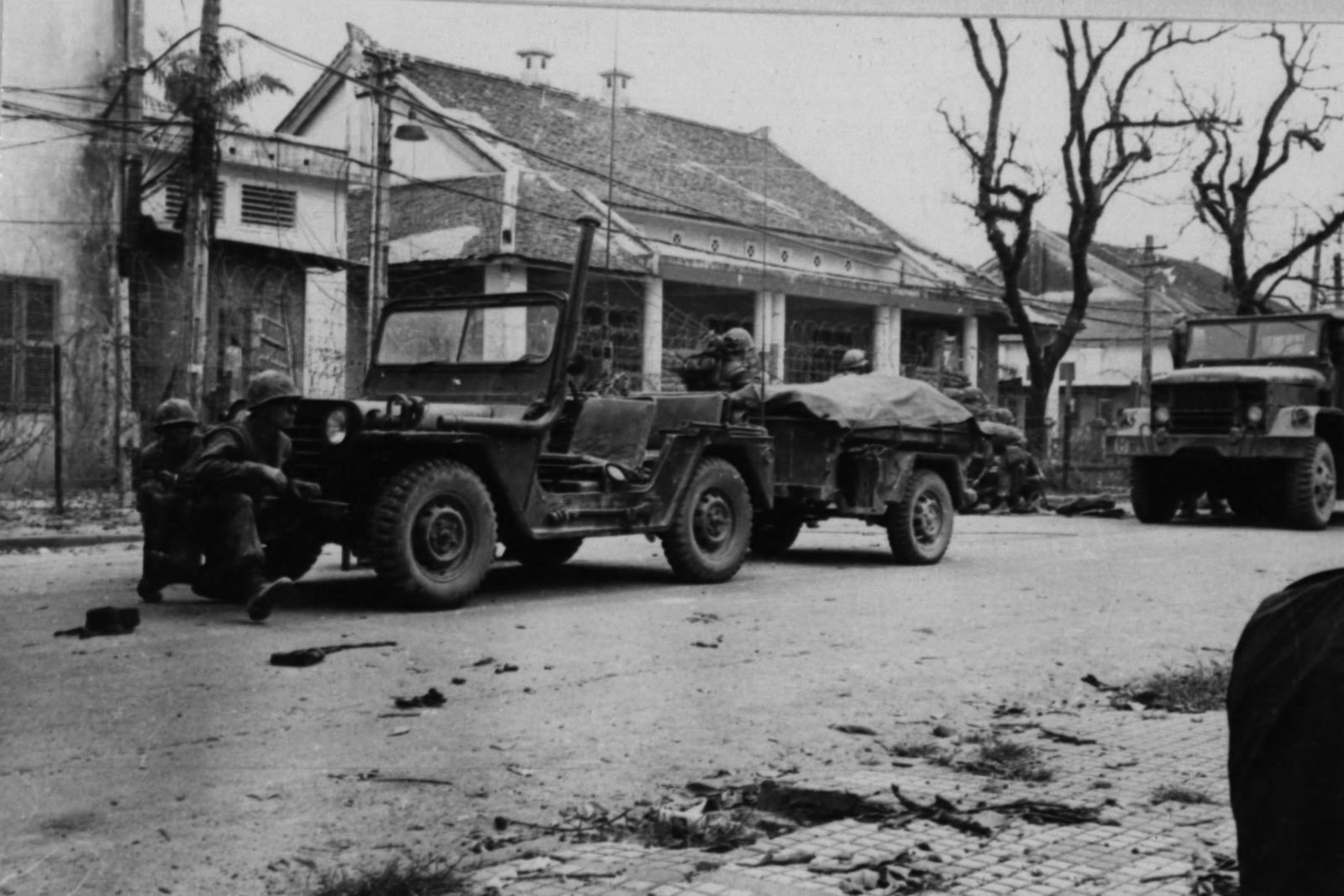
February 5, 1968 · Hue · U.S. Marine Corps photo. National Archives, 127-N-A371124. Source - Street fighting. Marines take cover behind vehicles during street fighting in Hue.
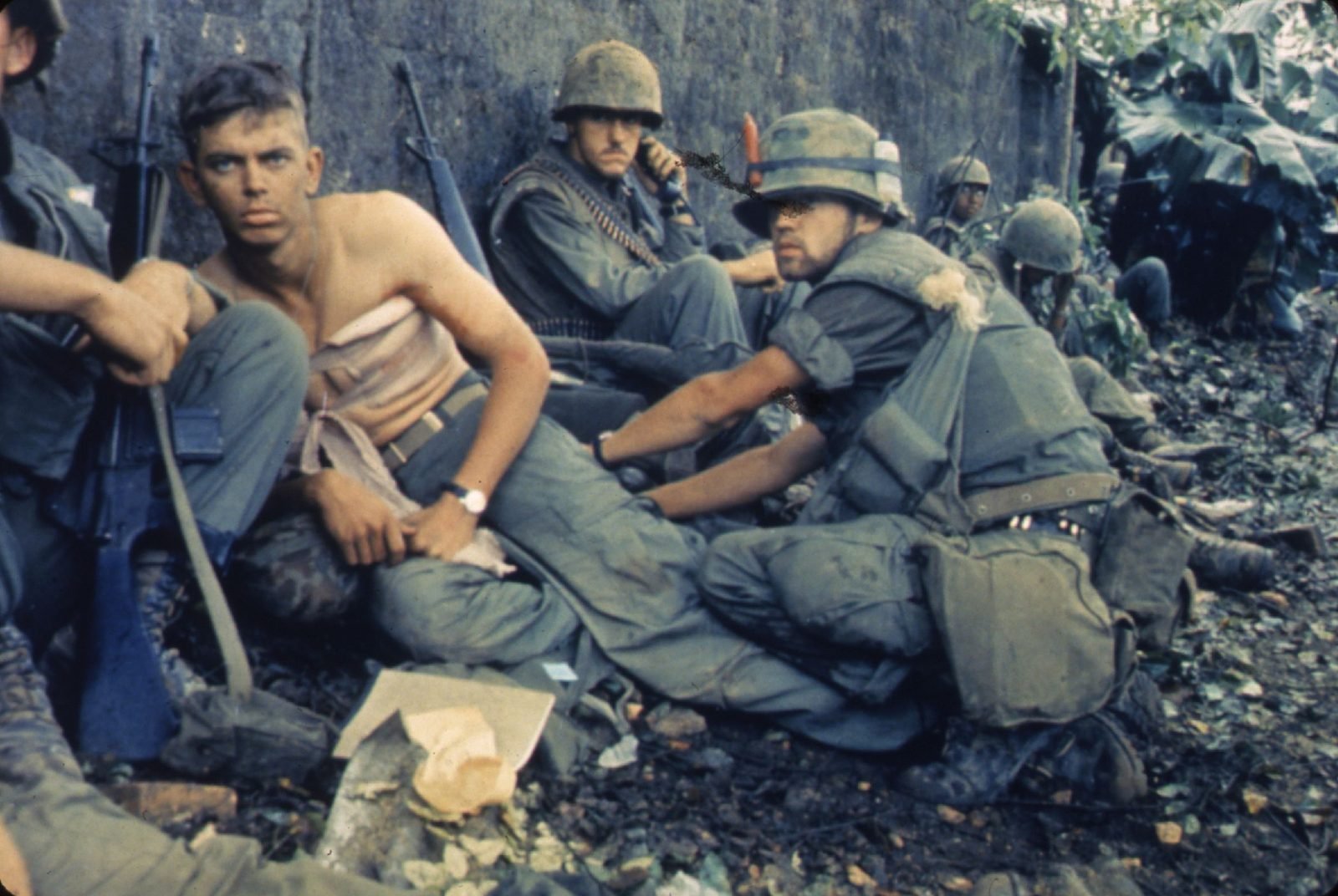
February 5, 1968 · Hue · Photo: Lance Cpl. R. J. Smith, U.S. Marine Corps. National Archives, 127-GVB-343-A371339. Source - Hue City. A Navy corpsman treats the wounds of Pfc. D. A. Crum of H Company, 2nd Battalion, 5th Marines, during the battle for Hue.
February 6, 1968 · Hue · U.S. Marine Corps photo. National Archives, 127-N-A371948. Source - Old Glory raised. Marines of H Company, 5th Marines, hold a captured enemy flag after raising the Stars and Stripes over the Thua Thien province headquarters in Hue.
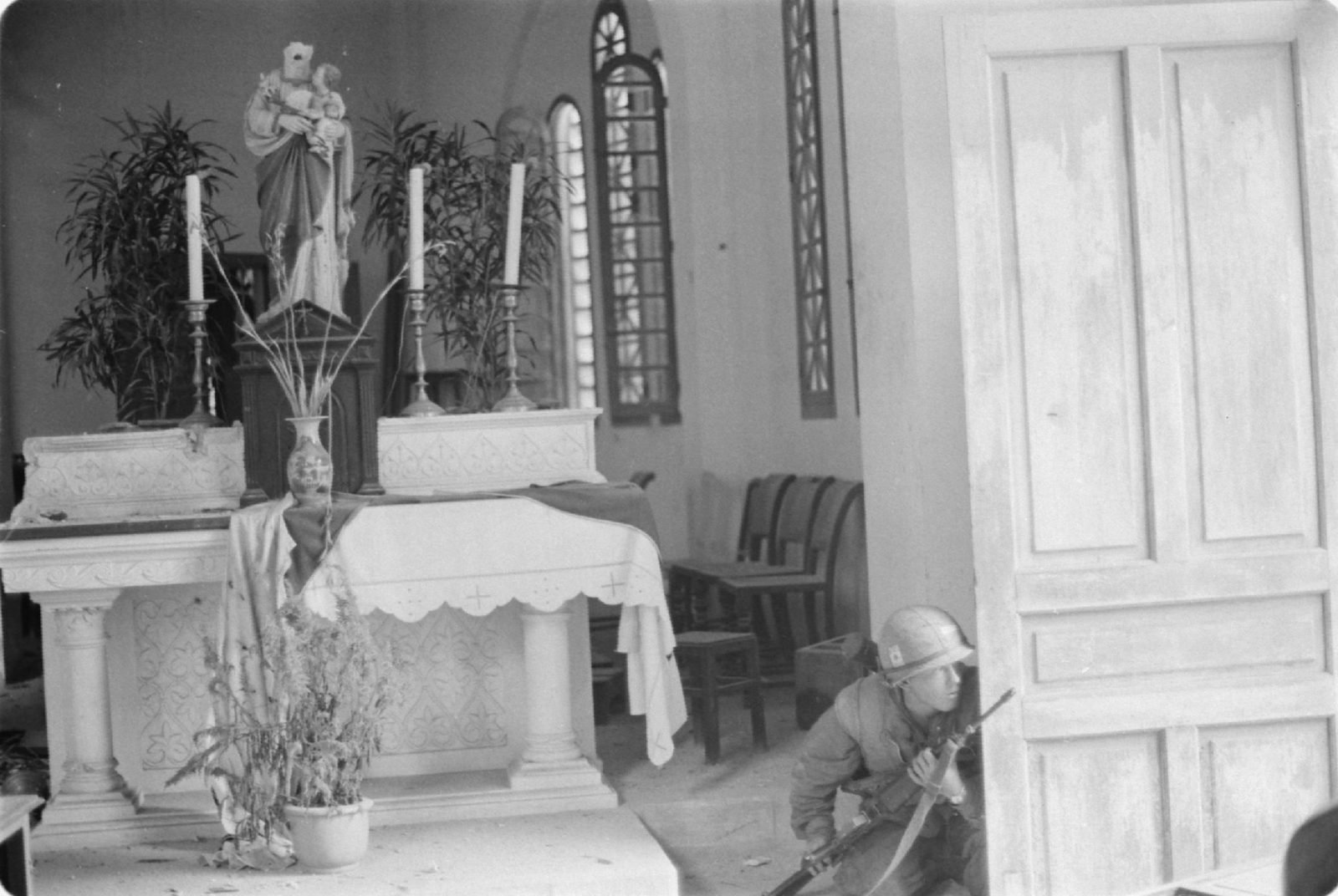
February 6, 1968 · Hue · Photo: Sgt. Dickman, U.S. Marine Corps. National Archives, 127-GVB-187-A371342. Source - Behind the church door. A Marine of Company A, 1st Battalion, 1st Marines, crouches behind a church door as he checks for the enemy.
February 9, 1968 · Hue · U.S. Marine Corps photo. National Archives, 127-N-A190475. Source - Government buildings. Government buildings in Hue, badly damaged in the heavy fighting for the city.
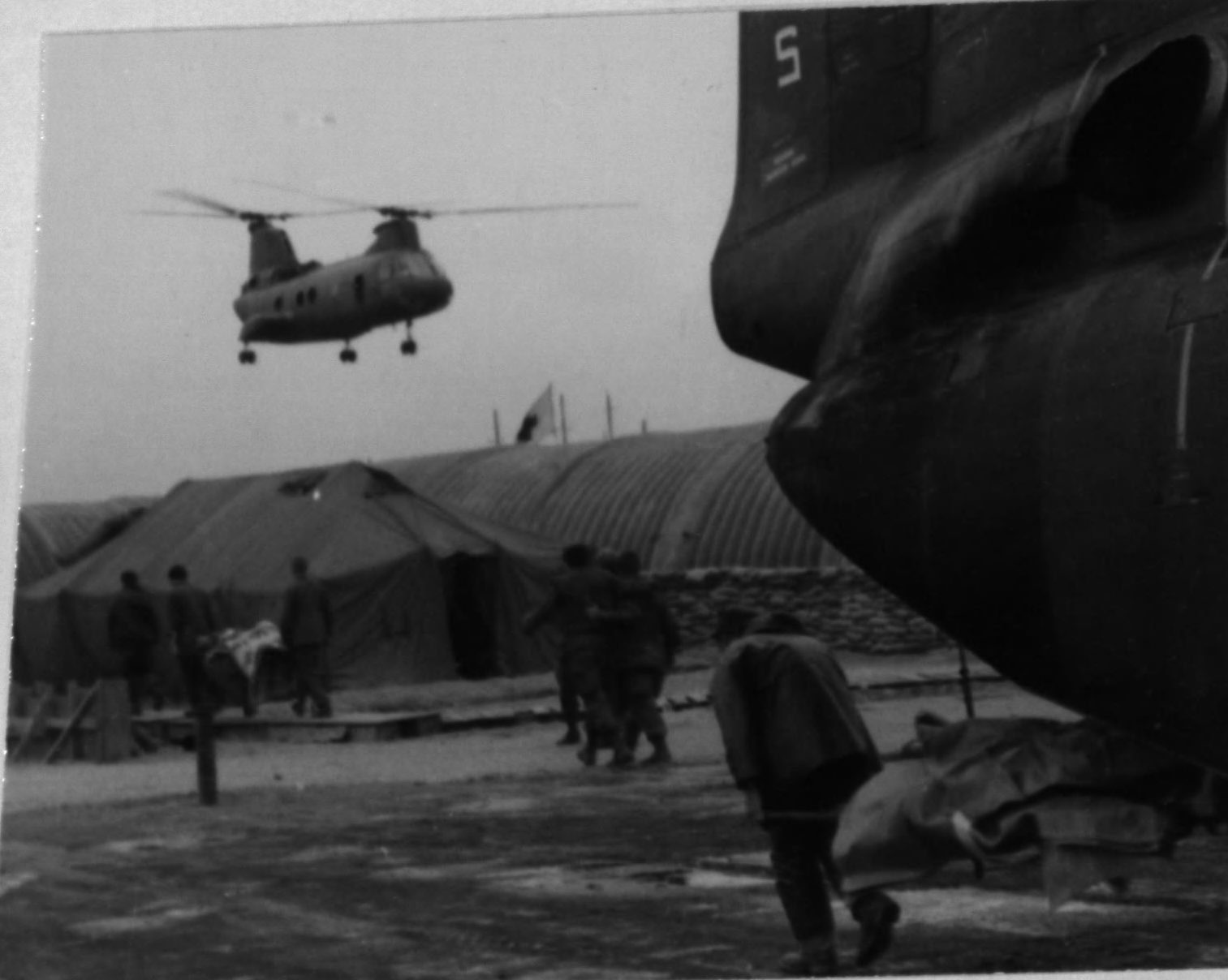
February 12, 1968 · Hue · Photo: Sgt. Reid, U.S. Marine Corps. National Archives, 127-GVB-178-A801246. Source - Out of Hue. Despite bad weather, Marine helicopters from Phu Bai rush wounded men from the fighting in Hue to a field hospital seven miles south.
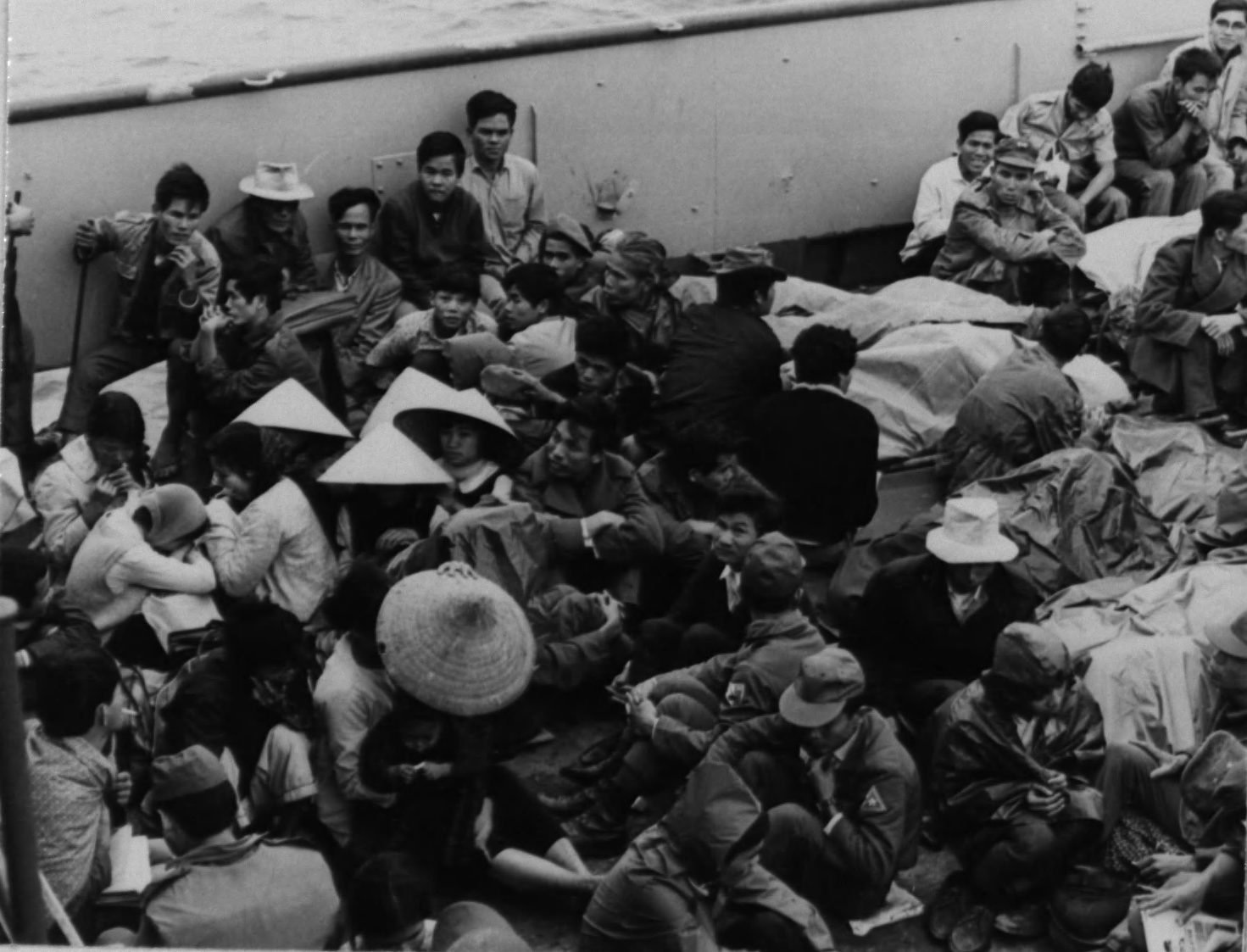
February 14, 1968 · Phu Bai · Photo: Staff Sgt. W. F. Schrider, U.S. Marine Corps. National Archives, 127-GVB-243-A422035. Source - Leaving Hue. Refugees are brought out of Hue by boat during the battle for the city.
February 18, 1968 · Hue · Photo: Hoeynck, U.S. Marine Corps. National Archives, 127-GVB-374-A190457. Source - Cronkite in Hue. CBS anchor Walter Cronkite interviews Professor Mai of the University of Hue. Days later, Cronkite told viewers he believed the war would end in stalemate.
February 20, 1968 · Hue · U.S. Marine Corps photo. National Archives, 127-N-A371381. Source - Cronkite at Hue. CBS anchor Walter Cronkite and his camera crew use a jeep as a camera dolly while interviewing the commander of the 1st Battalion, 1st Marines, during the battle for Hue.
February 20, 1968 · Hue · U.S. Marine Corps photo. National Archives, 127-N-A190589. Source - Across from the Citadel. Pfc. Harman Wheat of Louisville, Kentucky, fires from the university area across the river from the Citadel during the battle for Hue.
February 22, 1968 · Hue · Photo: Cpl. Smedley, U.S. Marine Corps. National Archives, 127-GVB-118-A371423. Source - A break in the fighting. A Marine Ontos crewman rests during a lull in the fighting at Hue.
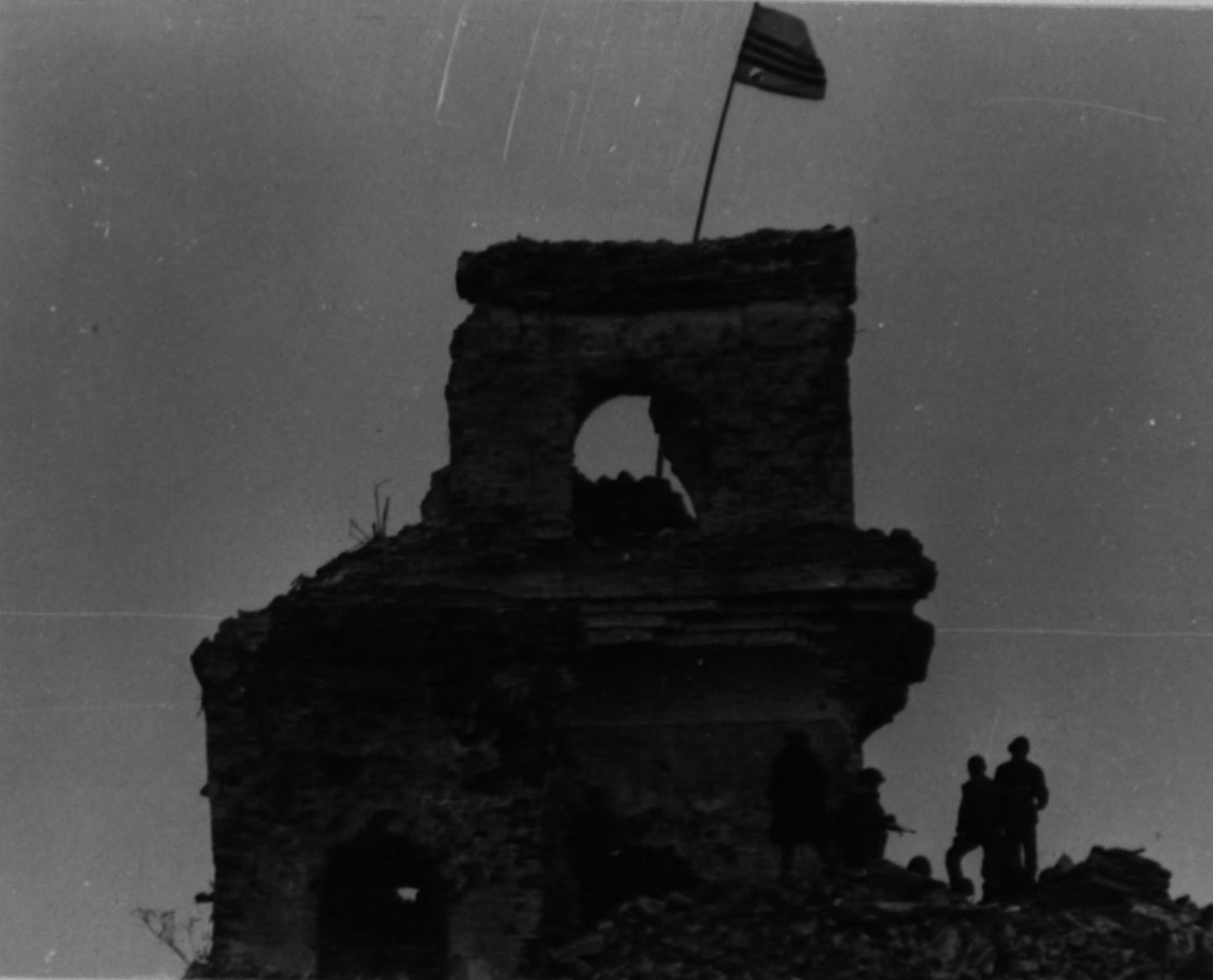
February 23, 1968 · Hue · U.S. Marine Corps photo. National Archives, 127-N-A190767. Source - Flag over the Citadel. South Vietnamese troops stand atop a gate of the Imperial walled city in Hue after raising their flag.
February 24, 1968 · Hue · Photo: D. M. Massenger, U.S. Marine Corps. National Archives, 127-GVB-313-A190814. Source - Rooftop fire. A Marine of D Company, 1st Battalion, 27th Marines, fires an M60 machine gun from a rooftop during an operation near Hue, weeks after the city was retaken.
April 14, 1968 · Near Hue · Photo: Cpl. D. Fisher, U.S. Marine Corps. National Archives, 127-N-A371498. Source - Planning near Hue. Lt. Col. Greenwood and Capt. Kahler of the 27th Marines plan their next move near Hue.
April 14, 1968 · Near Hue · U.S. Marine Corps photo. National Archives, 127-N-A374480. Source - Silver Star. 1st Lt. Ronald C. Morrison of Upper Darby, Pennsylvania, received the Silver Star for leading his platoon of tanks, A Company, 1st Tank Battalion, against the Citadel in Hue on February 15, 1968.
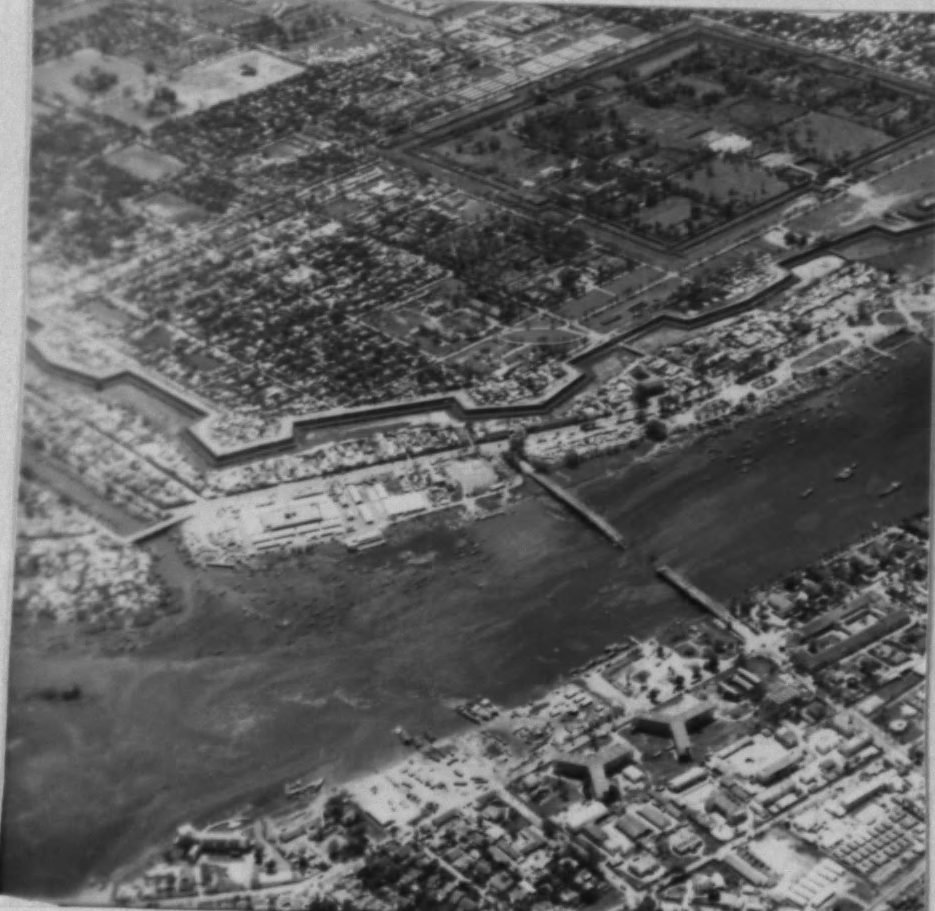
June 4, 1968 · Hue · Photo: Sgt. Dickman, U.S. Marine Corps. National Archives, 127-GVB-78-A371568. Source - Hue from the air. An aerial view of Hue months after the battle, with the walled Citadel and the Perfume River.
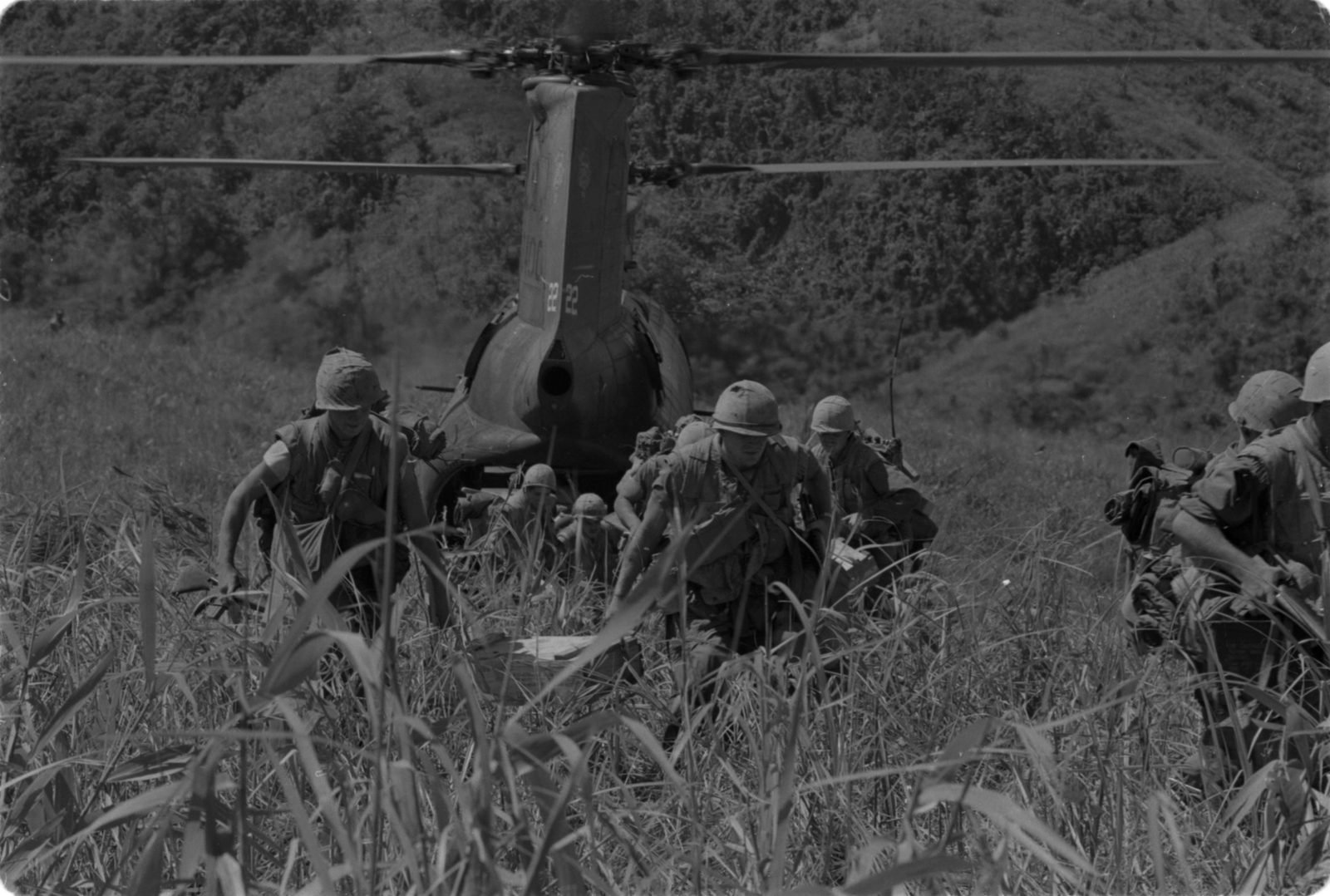
June 24, 1968 · Hue · Photo: Sgt. T. H. Nairns, U.S. Marine Corps. National Archives, 127-GVB-11-A801129. Source - Elephant grass at Khe Sanh. Marines, half hidden by tall elephant grass, move out from a CH-46 Sea Knight helicopter on a search-and-clear mission near Khe Sanh.
October 9, 1968 · Near Khe Sanh · Photo: Schackmann, U.S. Marine Corps. National Archives, 127-N-A192416. Source - Identifying the dead. A year after Tet, Hue city officials who identified the victims of the 1968 killings arrange coffins before a funeral.
1969 · Hue · U.S. Army photo. National Archives, 111-SC-653965. Source - Coming back to Cholon. Three women return to Cholon to salvage what they can after an attack leveled two city blocks.
· Cholon, Saigon · U.S. Information Agency photo. National Archives, 306-MVP-5(4). Source
All photographs: official U.S. government photos, National Archives. Captions are based on the photographers' original captions.